
Living in Plymouth – 10 Reasons to Move to the Devonshire Coast

Ever wondered what it would be like living in Plymouth?
Plymouth has quietly become one of the most talked-about places to live in the Southwest.
Sitting where the rivers Plym and Tamar meet the English Channel, this historic naval city combines a dramatic waterfront, a genuinely affordable property market, and an economy investing heavily in its own future.
Whether you are drawn by the Georgian streets of the Barbican, the wide green spaces of Central Park or the promise of a shorter walk to the water, Plymouth in 2026 has plenty to offer anyone weighing up a move to Devon.
In this guide, we look at what life in Plymouth is really like in 2026, from current house prices and rental costs to jobs, schools, transport links, and the best of the local culture, so you can decide whether the Devonshire coast is the right next chapter for you.
If you’re seriously considering living in Plymouth, this article is for you.
A Short Overview of This Blog
This guide covers everything you need to know about relocating to Plymouth in 2026, from the property market to the practicalities of settling in. Each section below can be read on its own, so feel free to jump straight to the topic that matters most to you.
- Coastal living, Plymouth’s beaches, waterside walks and easy access to Dartmoor and the Southwest Coast Path make it one of the most outdoor-friendly cities in England.
- Property prices, current average house prices in Plymouth and how they compare with the wider Southwest and national picture.
- Renting, up to date average rents and what tenants can expect to pay across the city.
- Jobs and the economy, the multibillion-pound investment reshaping Devonport and the wider Freeport driving new employment.
- History and culture, from the Mayflower story to The Box museum and a lively arts scene.
- Food, drink and shopping, independent cafes, a historic gin distillery and the Barbican’s markets.
- Schools and education, options for families plus the city’s universities.
- Transport, rail, road, air, and ferry connections in and out of the city.
- Community and events, the calendar of festivals and gatherings that give Plymouth its character.
- Moving to Plymouth, practical advice on choosing an area and planning your relocation.
Read on for a detailed look at each of these, plus answers to some of the most common questions people ask when moving home.
1. Life on the Water’s Edge

Enjoy paddleboarding in Plymouth Sound National Marine Park, walking the Southwest Coast Path, or exploring the wild beauty of nearby Dartmoor.
It is Plymouth’s relationship with the sea that sets it apart from almost anywhere else in England.
Plymouth Sound, the sheltered bay at the heart of the city, was designated the UK’s first National Marine Park in 2023, and that status has continued to shape how the waterfront is used and protected.
On any weekend you will find paddleboarders and sailors on the water below Plymouth Hoe, families cooling off at the historic Tinside Lido, and walkers following the promenade out towards Mount Batten and the Barbican.
For longer days out, the Southwest Coast Path runs directly through the city, linking Plymouth to some of Devon and Cornwall’s most striking coastline, while beaches at Bovisand and Wembury are both within a short drive for rock pooling or a quieter swim.
Inland, Dartmoor National Park is under an hour away, giving residents wild moorland walking, cycling, and stargazing on their doorstep.
Few UK cities offer this kind of everyday access to both sea and moor.
2. Property Prices in Plymouth: What to Expect in 2026
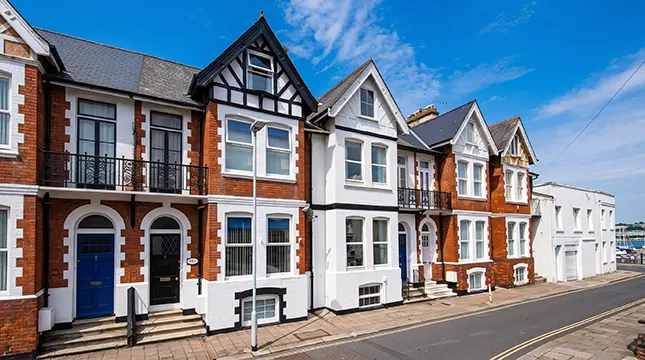
Affordable coastal homes in Devon. Discover why Plymouth’s £217,000 average property price sits comfortably below both regional and national averages.
Plymouth remains one of the more affordable coastal cities in England, which is a large part of its appeal for people relocating from London, the Southeast or further afield.
According to the Office for National Statistics, the provisional average house price in Plymouth stood at around £217,000 in March 2026, up from roughly £211,000 a year earlier, an annual rise of close to 3 per cent.
That compares with a Southwest average of around £301,000 and a UK average of around £268,000, so Plymouth remains well below both regional and national norms.
First-time buyers paid an average of around £194,000 over the same period, and growth has not been even across property types.
Semi-detached homes rose fastest in value over the year, while flats saw a modest fall, so the type of property you are looking for will shape how far your budget stretches.
Sought-after areas such as Plymstock, Hartley and the fringes of Peverell tend to command a premium for family houses with gardens, while the city centre and Devonport offer better value for flats and starter homes.
If you want to see live listings and get a feel for prices street by street, Rightmove’s local house price tool is a useful place to start your search before you view properties in person.
3. Renting in Plymouth: Costs and Availability

Compare vibrant waterfront flats on the Barbican with spacious family homes in Plymstock, with average private rents sitting just under £1,000 per month.
For those not ready to buy, Plymouth’s rental market remains considerably cheaper than most other coastal or university cities in the Southwest.
The average monthly private rent across the city was just under £1,000 in early 2026, with one-bedroom flats seeing the fastest growth as demand from students, key workers, and young professionals continues to rise.
Popular rental areas include the Hoe and Barbican for waterfront living, Mutley Plain for its cafes and independent shops close to the city centre, and Plympton or Plymstock for larger family homes with easier parking.
As with any city, it pays to view several properties and compare like for like, since rents can vary noticeably between streets that are only a short walk apart.
Rightmove is also helpful here; with almost 700 properties currently listed, there’s plenty of choice for prospective renters.
4. Jobs, Careers, and a City on the Rise

Benefit from the £7.1 billion government investment into HMNB Devonport and thousands of new roles at the Plymouth and South Devon Freeport.
What is really turning heads in 2026 is Plymouth’s investment pipeline.
In July 2026, the government confirmed a £7.1 billion, ten-year programme of work at HMNB Devonport, the largest naval base in Western Europe, as part of a wider £26 billion investment across the UK’s three main naval bases.
The funding is underpinning thousands of skilled jobs across the city and the wider Devon region, securing Plymouth’s role as the home of the Royal Navy’s submarine maintenance and Continuous at Sea Deterrent programme well beyond 2070.
Alongside this, the Plymouth and South Devon Freeport is driving inward investment in marine technology, advanced manufacturing, and net zero industries, with thousands of new jobs forecast at sites including Oceansgate and Langage Business Park.
Add a thriving digital business cluster, the University of Plymouth’s innovation ecosystem and a growing creative sector, and you have an economy in genuine forward motion.
For anyone considering a move with career ambitions intact, Plymouth deserves a serious look.
5. History and Culture on Every Corner
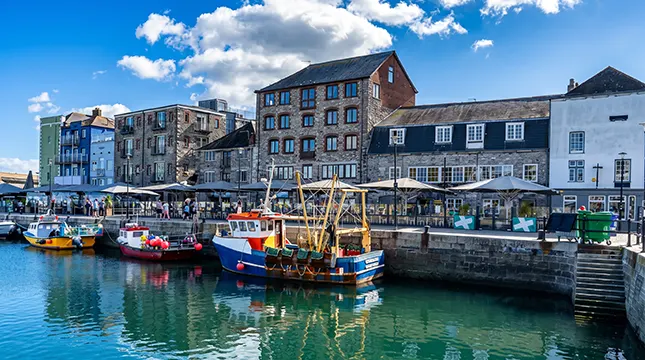
Walk the cobbled lanes of the Barbican, visit The Mayflower Museum, or explore the award-winning collections at The Box.
Few English cities wear their history as visibly as Plymouth.
The cobbled lanes of the Barbican, one of the largest surviving Elizabethan and Jacobean quarters in the country, trace the route the Mayflower Pilgrims took in 1620 on their journey to America, and the story is told in detail at The Mayflower Museum on the harbourside.
Just up the hill, The Box brings together Plymouth’s art, natural history and maritime collections in an award-winning museum housed in a former school and church.
While the Royal Citadel still stands guard over the Sound as it has since the 17th century.
For a lighter afternoon, the Theatre Royal and a busy calendar of live music venues keep the cultural scene firmly in the present as well as the past.
6. Food, Drink, and Independent Shopping

Enjoy waterfront dining at the restored Royal William Yard, or book a tasting at the historic Plymouth Gin Distillery.
Plymouth’s food and drink scene has grown considerably in recent years.
Royal William Yard, a beautifully restored Georgian naval victualling yard on the waterfront, is now home to independent restaurants, bars, and a cinema with views straight across the water.
In the Barbican, Plymouth Gin has been distilled at the same site since 1793, making it the oldest working gin distillery in England, and tours and tastings are a popular way to spend an afternoon.
For everyday shopping, the Pannier Market and the surrounding streets around Frankfort Gate offer independent traders, fresh produce, and vintage finds, while Drake Circus covers the larger retail names.
Mutley Plain and the Barbican both have a strong concentration of independent cafes if you prefer to shop local.
7. Schools and Education for Families

Secure places at top-performing grammar schools like Devonport High School, or study at the highly respected University of Plymouth.
Plymouth offers a wide range of state, faith, and independent schools, along with two respected grammar schools, Devonport High School for Girls and Devonport High School for Boys, both of which consistently post strong exam results.
Families moving to the area are advised to check catchment areas carefully, since admission to the most sought-after primary and secondary schools can be competitive in popular postcodes such as Peverell, Hartley and Plymstock.
The Get Information about Schools service lets you search official performance and Ofsted data for any school in the city before you commit to an area.
Plymouth is also a genuine university city. The University of Plymouth has particular strength in marine science, medicine, and engineering, while Arts University Plymouth and City College Plymouth broaden the choice for further and higher education, making the city a practical base for families with older children as well as younger ones.
For school places and admissions, visit the Plymouth.Gov.UK website.
8. Getting Around: Transport and Connectivity
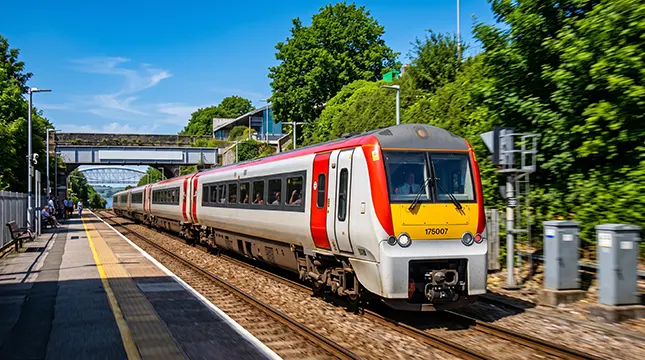
Connect directly to London Paddington in around three hours, or take advantage of regular Brittany Ferries sailings to France and Spain.
Plymouth’s transport links have long been one of its quieter selling points.
Direct trains run to London Paddington in around three hours from Plymouth station, with regular services also connecting to Exeter, Bristol and beyond, making a hybrid working pattern realistic for those who need occasional access to the capital.
By road, the A38 links the city to the M5 at Exeter for onward travel across the Southwest, and journeys to Exeter itself typically take around an hour.
Plymouth does not currently have its own commercial airport, so most air travellers use Exeter Airport, roughly 45 minutes away by car.
For something a little different, Brittany Ferries runs regular sailings from Plymouth to Roscoff in France and Santander in Spain, giving residents an easy, car-friendly route into Europe without needing to travel via the Southeast.
Within the city, a well-used bus network and an expanding cycle path system make getting around without a car increasingly realistic, particularly in the central and waterside areas.
9. Community Spirit and the Events Calendar
Plymouth’s calendar is busy all year round.
The British Firework Championships light up the Sound every August, drawing crowds along the Hoe for one of the country’s best free spectacles, while Armed Forces Day and a range of maritime festivals reflect the city’s naval heritage.
Plymouth Argyle Football Club gives the city a strong sporting identity, and community events around Royal William Yard, the Barbican and Central Park run throughout the seasons, from open air cinema in summer to Christmas markets in winter.
New residents often find that this sense of occasion, combined with a genuinely friendly, unpretentious character, makes settling in easier than in many larger cities.
For a list of festivals and events, take a look at what’s on in Plymouth.
Plymouth is big enough to offer variety, but small enough to still feel like a community.
10. Making Your Move to Plymouth

Trusted Devon removals with White & Company. Rely on our experienced local branch for expert packing, secure storage, and a stress-free transition to the coast.
Once you have decided Plymouth is the right fit, the next step is choosing the area that suits your lifestyle.
Families often gravitate towards Plymstock, Plympton, or the villages just outside the city, such as Ivybridge, for larger homes and good schools, while professionals and downsizers are increasingly drawn to the Hoe, Barbican, and Millbay for waterfront living within walking distance of the centre.
Autumn is traditionally one of the busiest times of year for relocations to the Southwest, as families aim to settle in before the new school term and before the weather turns, so it is worth booking your removal date and any survey well in advance if you are planning a September move.
That is where White & Company’s Plymouth branch comes in. With decades of experience moving families in and out of the city, our local team can arrange a free home survey, tailored packing options, and secure storage if there is a gap between moving out and moving in.
White & Company Plymouth are here to take the stress out of the practical side of your relocation so you can focus on settling into your new home on the Devonshire coast.
We are very easy to contact by phone, email, or chat with our friendly online assistant, Brad. However you would like to get in touch, we are here ready to help at any time.
Living in Plymouth Frequently Asked Questions
Whether this is your first move or your fifth, a few questions tend to come up again and again. Here are answers to five of the most common ones.
How far in advance should I book a removal company?
It is best to book at least four to six weeks before your move date, and earlier if you are moving during a busy period such as September or over the summer. Booking early gives you a better choice of dates and times to arrange a home survey. You can find further guidance in our moving checklist.
What is the best time of year to move house?
Spring and early autumn tend to be the most popular seasons for moving, thanks to milder weather and longer daylight hours, while the run-up to Christmas and the depths of winter are generally quieter and can offer more flexibility on removal dates. Weekdays are usually cheaper than weekends since demand for removals tends to be highest on Fridays and Saturdays.
How much does it typically cost to move house in the UK?
Costs vary widely depending on the size of your property, the distance you are moving and whether you need packing or storage included. A local move of a small property might cost several hundred pounds, while a larger family home moving a longer distance, or requiring temporary storage, will cost more. The best way to get an accurate figure is to arrange a free home survey so your removal company can quote based on the actual volume of your belongings.
What should I do to update my address after moving?
Notify your bank, employer, GP, utility providers, and the DVLA as early as possible, and set up mail redirection with Royal Mail to catch anything you miss. Our change of address checklist runs through the organisations most people forget to update, from insurers to subscription services.
Do I need extra insurance for a house move?
Standard home contents insurance does not always cover items in transit, so it is worth checking with your removal company what protection is included and whether additional cover makes sense for higher value items. Choosing a company that is a member of the British Association of Removers also gives you access to an advance payment guarantee and an independent dispute resolution service, adding an extra layer of protection for your move.

Max is a seasoned writer and blogger in the real estate and home moving sectors, as well as a knowledgeable source of information for expatriates living and working abroad. His detailed insights have helped thousands of people move and live abroad with greater simplicity and ease.

Posted in: News
Leave a Comment (0) ↓