
Moving to Spain from the UK in 2026: 26 Things You Need to Know

Considering making the jump and moving to Spain from the UK in 2026?
Spain consistently tops the list when British people think about starting fresh abroad.
The weather alone would seal the deal for most, but there is so much more to it than sunshine.
A slower pace of life, outstanding food, vibrant culture, and a cost of living that still undercuts the UK in many areas, it is easy to see why tens of thousands of Brits make this leap every single year.
That said, moving to Spain in 2026 is not quite as straightforward as it once was.
Brexit changed the rules, and getting your head around visa options, residency permits, tax obligations, and property processes takes real planning.
This guide walks you through everything you need to know, from choosing the right location to shipping your belongings, so you can arrive ready rather than overwhelmed.
Key Takeaways for Moving to Spain from the UK in 2026
A quick snapshot of everything you need to plan your move with confidence.
- Visa options explained for UK citizens post-Brexit residency routes
- Understanding the 90-day rule, ETIAS, and long-term residency pathways clearly
- Choosing the right region based on lifestyle, budget, and priorities
- Cost of living comparison showing savings versus typical UK expenses
- Spanish property market trends, growth forecasts, and buyer considerations explained
- Why renting first helps you avoid costly location mistakes early
- Step-by-step guide to buying property and an associated purchase costs overview
- Affordable regions offering the lowest property prices and best value opportunities
- How to find trustworthy estate agents and avoid common property pitfalls
- Using a gestor to simplify Spanish bureaucracy and administrative processes
- Opening a Spanish bank account and managing finances efficiently abroad
- Saving money with smarter international transfers and exchange rate strategies
- Employment opportunities, key industries, and realistic salary expectations are outlined
- Spanish tax system explained, including residency rules and double taxation agreements
- Work-life balance benefits and cultural differences compared to the UK lifestyle
- Healthcare system overview, including public access and private insurance requirements
- Education options for families including state, international, and university routes
- Safety in Spain with low crime rates and awareness of petty theft risks
- Transport options, including trains, driving rules, and domestic travel accessibility
- Climate differences across regions and choosing what suits your lifestyle best
- Importance of learning Spanish and understanding regional language differences
- Adapting to Spanish culture, lifestyle rhythms, and social expectations smoothly
- Moving with pets, including vaccinations, documentation, and travel requirements explained
- Customs regulations for household goods and duty-free import eligibility rules
- Exploring Spain’s natural landscapes beyond beaches for long-term lifestyle enjoyment
- How White & Company supports your international move from start to finish
Plan properly, choose wisely, and your move to Spain becomes far smoother and far more rewarding.
1. Your Visa Options as a UK Citizen in 2026

From the popular Non-Lucrative Visa to the Digital Nomad route, discover the exact legal pathways available to British nationals.
The first thing to understand is that since Brexit, British nationals are treated as non-EU citizens for Spanish immigration purposes. Freedom of movement is gone, and you cannot simply show up and settle in. The routes available to you are, however, well-established and entirely achievable with the right preparation.
If you are planning a short visit of up to 90 days in any 180-day period, no visa is required.
But that clock covers the entire Schengen Area, not just Spain, so be mindful if you plan to travel around Europe during that time. Beyond 90 days, you need a formal residency route.
The Non-Lucrative Visa (NLV) is the most popular choice for retirees and those with passive income. To qualify in 2026, you need to demonstrate a minimum annual income of around €28,800 as a single applicant, along with comprehensive private health insurance covering you fully in Spain.
This visa does not permit local employment, but it is renewable and leads toward permanent residency after five years of continuous legal residence.
The Digital Nomad Visa has become Spain’s flagship residency route for remote workers, particularly since the property-investment Golden Visa was closed to new applicants in 2025.
Introduced under Spain’s Startup Act, it allows non-EU citizens to live in Spain while working for companies based outside Spanish territory.
The income threshold stands at around €2,850 per month for a single applicant in 2026. You can find the current requirements and application process directly from the Spanish Consulate in London.
Employment visas tied to a Spanish employer are another option, though the process is demanding.
Self-employment (autónomo) visas are also available for those planning to run their own business. One critical point: most visas must be applied for from the UK before you travel.
Attempting to sort residency after arriving as a tourist carries real legal and financial risks. Always start the paperwork early.
For the latest official guidance, the UK Government’s Living in Spain page is essential reading.
2. Post-Brexit: Understanding the New Rules

Avoid the common pitfalls of the Schengen allowance and prepare for the upcoming ETIAS travel authorisation requirements.
It is worth dwelling a little longer on exactly what Brexit means for you in practice, because there are some common misunderstandings that catch people out.
The most important is the 90-day rule. As a UK passport holder, you can spend up to 90 days in Spain and the wider Schengen Area in any 180-day rolling period without a visa. What many people get wrong is thinking a short trip to the UK resets that clock. It does not. The 90 days are counted against a rolling 180-day window, wherever in Schengen you have been.
From late 2026, UK nationals will also need to register through the European Travel Information and Authorisation System, known as ETIAS, before travelling to Spain for short stays.
It is not a visa, it is an automated pre-travel authorisation similar to the US ESTA, but it will be a required step and will involve a small fee.
The good news is that the long-term picture is positive.
British citizens who were legally resident in Spain before 31 December 2020 retain protected rights under the Withdrawal Agreement. For those arriving after that date, clear legal pathways exist.
After five years of continuous legal residence, permanent residency is available. After ten years, Spanish citizenship can be applied for. For up-to-date legal guidance on residency rights,
Nockolds Lawyers Spain maintains a regularly updated resource covering the current position.
3. Choosing Where to Live in Spain

Whether you want the cosmopolitan lifestyle of Barcelona or the expat-friendly Costa del Sol, let your daily lifestyle needs guide your choice.
Spain offers a huge variety, so choosing the right location is key to whether you truly enjoy life there.
Before deciding, think about your day-to-day lifestyle:
- Walkable beach access or city living?
- Access to international schools?
- Reliable broadband for remote work?
- Strong expat community or full Spanish immersion?
Let lifestyle lead your decision, not just picture-perfect views.
Popular Areas to Consider:
- Costa del Sol (Marbella, Fuengirola, Nerja)
Well-established expat hubs with great healthcare, warm climate, and excellent amenities, including golf courses. - Costa Blanca (Alicante region)
More affordable than the Costa del Sol, with strong UK flight links and good value property. - Murcia
Quieter, more traditional Spanish feel with some of the lowest property prices along the southern coast. - Mallorca (Palma)
Combines island beauty with a cosmopolitan lifestyle and strong infrastructure. - Barcelona
Ideal for professionals and younger movers seeking city life, culture, and beaches in one place. - Northern Spain (Basque Country, Galicia, Cantabria)
Greener, cooler, and less crowded by expats, perfect for a more authentic Spanish experience.
Final Tip
Always visit before committing. Spend time in different areas, in different seasons, because nothing beats seeing what life feels like on a normal weekday.
4. What Your Money Gets You: The Cost of Living

Enjoy a lower cost of living compared to the UK, with significant savings on fresh groceries, dining out, and utility bills.
One of the biggest draws of relocating to Spain is the potential to live better for less, and for many people, that potential is very much a reality. According to
Numbeo’s cost-of-living comparison tool, overall costs in Spain run roughly 30 to 40% lower than in the UK, though this varies considerably by region.
Groceries, dining out, and utility bills are where the savings are most striking. A quality three-course meal with wine at a mid-range Spanish restaurant typically costs €35 to €50, compared to the equivalent experience in a British city. Fresh produce, especially in local markets, is plentiful and affordable.
Mercadona, Spain’s largest supermarket chain with over 1,650 stores nationwide, gives a useful real-time snapshot of everyday grocery pricing if you want to run your own comparisons before moving.
Monthly rent for a two-bedroom apartment in a smaller city might come to €600 to €900. The same budget gets you considerably less in Madrid or central Barcelona, where one-bedroom flats regularly reach €1,200 to €1,800. The honest caveat is salary — if you are working for a Spanish employer, wages are generally lower than in the UK. If you are bringing UK or international income with you through a pension, remote work, or investment, the financial case for relocating becomes considerably more compelling.
5. Spain’s Housing Market in 2026

Understand the persistent high demand and low supply driving Spanish property prices in popular coastal regions.
The Spanish property market is in the midst of a sustained boom driven by structural factors rather than speculation. According to
CaixaBank Research, house prices rose around 10% nationally in 2025, and further growth of around 6% is forecast for 2026. On the coastal markets most popular with British buyers, analysts are projecting growth of 5% to 10% depending on location.
The underlying driver is a persistent imbalance between supply and demand.
Spain is adding around 180,000 new households annually, while construction delivers only around 90,000 to 100,000 new homes. That gap is not expected to close meaningfully in 2026.
For buyers, the practical implication is that waiting for prices to soften, particularly in popular coastal and island locations, is unlikely to be a rewarding strategy.
There are no restrictions on UK citizens purchasing property in Spain. Brexit did not change that right. What it did change is that property ownership alone confers no residency rights.
Your visa situation needs to be resolved entirely separately from any property purchase.
6. Renting a Home: A Smart First Move
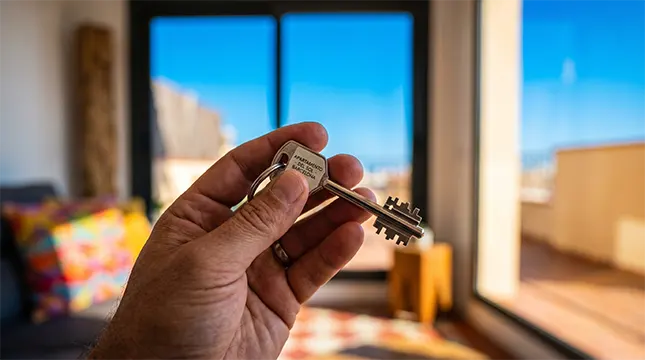
Experience the region across different seasons and build your credit history by renting before committing to a property purchase.
Many experienced expats recommend renting for at least the first year before buying, and that advice is worth taking seriously.
Spain’s regions vary enormously in character, lifestyle, and climate, and what feels like paradise in August can feel very different in a wet February.
Furnished rentals are widely available in expat-popular areas, and the process of renting as a foreign national is relatively straightforward.
Deposits are typically one to two months’ rent, and contracts run for a minimum of one year under Spanish law, with renewal rights in the tenant’s favour. Landlords generally require lower deposits than their UK equivalents.
Idealista and Fotocasa are the two most comprehensive portals for finding long-term rentals across Spain.
If you want to understand what a Spanish rental contract actually involves before you sign anything, Fotocasa Life’s rental guide breaks it down in clear, practical terms.
7. Buying Your Spanish Home: A Step-by-Step Overview

Learn the step-by-step sequence of buying a home in Spain, from securing your NIE number to completing before a state-appointed notary.
When you are ready to buy, the process is well established but involves several distinct steps that differ from those in the UK conveyancing system. Understanding the sequence before you start saves a lot of confusion.
You will first need a NIE number (Número de Identificación de Extranjero), the tax identification number required for all property transactions in Spain. After that, the typical sequence runs as follows: finding your property through platforms like
Idealista or Kyero; appointing an independent lawyer to carry out due diligence; signing a reservation contract with a holding deposit of roughly €3,000 to €6,000; completing the private purchase contract with a 10% deposit; and finally completing the transaction before a notary.
Budget for additional purchase costs of between 8% and 12% on top of the purchase price to cover property transfer tax, notary fees, land registry registration, and legal fees.
Spanish banks typically offer mortgages to non-residents at 60% to 70% loan-to-value, with interest rates in early 2026 generally sitting between 3.5% and 5.5%. For a fuller guide to the purchasing process,
Advocate Abroad’s buying guide for UK citizens is a thorough and regularly updated reference.
8. The Cheapest Places to Buy in Spain

Discover incredible value in beautiful, less-touristed regions like Jaén, Lugo, and Castellón de la Plana.
For those whose priority is value for money over coastal glamour, several Spanish provinces offer genuinely affordable property alongside a good quality of life.
These areas tend to be inland or in less-touristed regions, but they have their own considerable appeal:
- Jaén (Andalusia)
Around €1,034 per m². Known for olive groves, historic towns, and a relaxed pace of life. - Teruel (Aragón)
Roughly €1,030 per m². Offers striking medieval architecture and scenic countryside. - Lugo (Galicia)
Under €1,200 per m². Famous for its well-preserved Roman walls and traditional charm. - Zamora (Castilla y León)
Also below €1,200 per m². Quiet, historic, and far less crowded than major cities. - Castellón de la Plana (Valencian Community)
Around €900 per m². One of the best-value coastal options, close to beaches with good transport links to Valencia.
9. Finding a Trustworthy Estate Agent

Ensure you partner with reputable, API or AIPP-affiliated agents who can actively guide you through the local administrative processes.
The Spanish property market has no shortage of estate agents, and quality varies enormously.
To ensure you are working with someone reputable, look for agents affiliated with recognised professional bodies such as the API (Agentes de la Propiedad Inmobiliaria) or the AIPP (Association of International Property Professionals).
A good agent should have specific experience working with British buyers, be transparent about fees, and actively help you through the legal and administrative side of things rather than simply showing you around properties.
Ask for client references and check reviews independently. Be cautious of anyone who pushes hard for quick decisions or seems reluctant to allow proper time for due diligence.
10. Working with a Gestor: Your Bureaucracy Lifeline
If you have not come across the concept of a gestor before, you are about to become very grateful for their existence.
A gestor is a licensed administrative professional who specialises in navigating Spanish bureaucracy, part accountant, part paralegal, part guide through the labyrinthine world of Spanish officialdom.
They handle NIE applications, residency paperwork, tax filings, vehicle registrations, business setup documentation, and much more.
For newly arrived expats unfamiliar with the Spanish system, a reliable gestor is worth every euro. They know which forms are needed, which offices to visit, and how to avoid the delays that plague applications submitted with missing or incorrect documentation.
Many expats maintain an ongoing relationship with a gestor throughout their time in Spain. To find a registered professional, the
Colegio Oficial de Gestores Administrativos is the official body. Spain Expat offers the services of an English-speaking gestor to help you navigate Spanish bureaucracy.
11. Opening a Spanish Bank Account

Set up a non-resident account early to make paying rent, utilities, and taxes significantly easier upon your arrival.
Getting a Spanish bank account set up early should be near the top of your practical to-do list. It makes paying rent, utilities, and taxes vastly simpler, and many landlords and service providers require direct debit arrangements.
Major banks, including Santander, BBVA, CaixaBank, and Sabadell, all offer non-resident accounts, which allow you to bank in Spain before obtaining full residency status.
To open an account, you will generally need your passport, NIE number, proof of address, and, in some cases, evidence of income.
Spanish banking apps are well developed across major institutions, and the vast majority of day-to-day financial management can be handled entirely online.
Many expats find it practical to maintain both a UK account and a Spanish one during the transition period, making it easier to manage pension or salary payments arriving in sterling while covering Spanish expenses in euros.
Research current account options for non-residents on Bankinter’s international page.
12. Transferring Money Between the UK and Spain
Sending money between countries is something most people underestimate the importance of until they see how much they can lose doing it the wrong way.
Whether you are transferring funds to buy a property, covering monthly living expenses from UK savings, or receiving a pension in sterling and spending in euros, the exchange rate and fees you get make a meaningful difference.
High-street banks typically offer poor exchange rates and charge transaction fees on top, which can amount to thousands of pounds lost on a property purchase.
Foreign exchange specialists offer significantly better rates, lower fees, and services such as forward contracts that allow you to lock in a favourable rate for a future transaction.
13. Employment Opportunities and What to Expect

Discover the strongest job sectors for British expats and get a realistic picture of local salary expectations.
Spain’s economy has outperformed most of its European neighbours in recent years, and the jobs market reflects that.
Sectors with consistently strong demand include technology (AI, cybersecurity, cloud infrastructure), healthcare, engineering, education, and tourism and hospitality.
English-language teaching remains one of the most reliable entry points for newly arrived British nationals, with demand steady across both private language academies and state bilingual schools.
Average salaries are lower than in the UK. The national mean is around €27,000 gross per year, though professional roles in Madrid and Barcelona typically range from €35,000 to €40,000.
The financial trade-off is partially offset by the lower cost of living, but it is worth running your own honest numbers rather than assuming the maths will work out.
A useful starting point for salary benchmarking across sectors and cities is a website called Relocate’s Spain salary guide.
14. Understanding Spanish Tax
Once you spend more than 183 days in Spain in a calendar year, you are considered a Spanish tax resident and must declare your worldwide income to the Spanish tax authority.
The personal income tax rate (IRPF) is progressive, running from 19% on the lowest bracket to 47% at the top.
This is one area where taking professional advice before you move, rather than after, genuinely pays for itself.
The UK and Spain have a double taxation treaty, so the same income will not be taxed twice.
If you are relocating under the Digital Nomad Visa, the Beckham Law special tax regime offers a flat rate of 24% on income up to €600,000 for the first six years of residency, a significant advantage for higher earners working for overseas companies.
For all things tax-related in Spain, the official resource is Agencia Tributaria.
Property owners face an annual local property tax (IBI), and those with assets above certain thresholds may also be liable for wealth tax, which varies by autonomous community.
Self-employed workers registering as autónomo need to factor in monthly social security contributions as a fixed overhead.
15. Work-Life Balance: One of Spain’s Greatest Exports

Enjoy a culture that genuinely prioritises family time, long social evenings, and a refreshing shift in daily rhythm.
Whatever the financial considerations, Spain’s quality of life tends to win people over in ways that are genuinely difficult to put a monetary value on.
The country operates on a fundamentally different rhythm from the UK, and the sooner you embrace it rather than resist it, the more you will enjoy the experience.
Many companies operate a ‘horario intensivo’ during summer months, finishing the working day by early afternoon to make the most of the long, warm evenings.
Annual paid leave is a statutory minimum of 30 days.
Lunch is treated as a proper meal rather than a desk break, evenings are genuinely social, and the broader culture values family life, outdoor time, and community in a way that feels refreshing to most British arrivals.
It is not a perfect system, and certain things move slowly, bureaucracy can test patience, and August is the month that much of the country takes off simultaneously, making it a challenging time to get anything official done.
But for most people who make the move, the shift in pace is precisely what they were looking for.
16. Healthcare: Public and Private Options

Navigate Spain’s highly-rated public healthcare system or secure the comprehensive private insurance required for your residency visa.
Spain’s public healthcare system, the Sistema Nacional de Salud (SNS), is consistently rated among the best in Europe and is free at the point of use for those who qualify.
Access depends on residency and employment status.
Working residents who pay social security contributions are entitled to the public system.
Retirees receiving a UK state pension may be eligible for an S1 form through the NHS, which funds their access to Spanish healthcare.
Private health insurance is a requirement for most residency visa applications, and many expats retain it even after qualifying for public coverage, primarily for faster access to specialists and English-speaking doctors.
Premiums typically run between €50 and €200 per month, depending on age and level of cover. Leading providers include Sanitas, Adeslas, and ASISA.
It is important to note that the European Health Insurance Card (EHIC) is no longer valid for UK nationals in Spain post-Brexit. Its replacement, the UK Global Health Insurance Card (GHIC), covers emergency treatment during short stays but does not replace full private insurance for longer-term residents. Information on the GHIC is available on the NHS website.
17. Education for Expat Families

Choose between the excellent, free Spanish state school system or a range of international and bilingual private schools.
If you are relocating with children, schooling will be one of your most pressing practical decisions.
Spain’s state school system is free and compulsory from ages 6 to 16, and for families planning to stay long-term, it offers the best route to genuine integration and language acquisition.
Children adapt to Spanish remarkably quickly, even if it feels daunting at first.
For families on shorter timescales or where maintaining an English-language curriculum is essential, international schools offer British, IB, and American options.
Fees vary widely from around €3,000 to over €15,000 per year, and places at well-regarded schools in popular expat areas can be limited, so early enquiry is advisable.
For an overview of the Spanish education system and a directory of schools, the Spanish Ministry of Education is the official starting point.
Spain’s university system is well regarded and, for families approaching that stage, significantly more affordable than UK higher education, another factor worth considering in the overall financial picture.
18. Safety and Security in Spain
Spain consistently ranks among the safest countries in Europe.
Violent crime is genuinely rare, and in residential areas, smaller towns, and rural communities, the sense of personal safety is one of the things that strikes most British arrivals favourably.
The main concern in tourist-heavy urban areas is petty theft, pickpocketing and bag snatching in crowded spaces such as Las Ramblas in Barcelona or Madrid’s central metro stations.
The emergency number is 112, connecting to police, fire, and medical services.
Spain operates three police forces: the local Policía Local handles municipal matters, the Policía Nacional covers national policing in cities, and the Guardia Civil operates in rural areas and at borders. In purpose-built residential developments and gated communities, additional private security is common.
Connecting with local expat community groups early on yields useful, area-specific safety advice quickly.
19. Getting Around Spain

Travel with ease using the high-speed AVE train network, affordable domestic flights, and well-maintained national highways.
Spain’s transport infrastructure is genuinely impressive, making it one of the more manageable large European countries to navigate.
The high-speed AVE network connects Madrid, Barcelona, Seville, Valencia, and Málaga in a matter of hours, and
Renfe operates an extensive regional and local rail network beyond that. In cities, monthly public transport passes typically cost between €40 and €55.
Madrid’s metro is one of the most comprehensive in Europe, and more details are available at metromadrid.es.
If you are driving, your UK licence is valid for the first six months of residency. After that, it must be exchanged for a Spanish licence; the bilateral agreement between the UK and Spain allows this to happen without retaking a test.
Vehicles brought from the UK need to be registered in Spain within 30 days of the owner becoming a resident.
Budget airlines, including Vueling, Iberia Express, and Ryanair, make domestic routes between Spanish cities extremely affordable, particularly useful given the country’s size.
For intercity journeys where the AVE serves the route, the train is usually faster and more comfortable than flying once airport time is factored in.
20. Weather and Climate: Knowing What You Are Getting Into

From the scorching summers of Madrid to the green, temperate climate of northern Galicia, choose the region that suits your lifestyle.
Spain’s climate varies far more than most people expect, and matching yourself to the right region makes a real difference to day-to-day life.
The southeastern coast, the Costa del Sol, Alicante, and Murcia deliver 300-plus days of sunshine annually, with summer temperatures regularly hitting 35°C or above and mild winters rarely dropping below 10°C.
Madrid has a more continental character: scorching, dry summers and cold winters, occasionally with snow.
Northern Spain, Bilbao, San Sebastián, and Galicia, has a climate closer to Ireland than Andalusia: green, frequently rainy, and rarely extreme in either direction.
The Canary Islands offer consistent spring-like temperatures year-round with very little seasonal variation, which is one reason they are so popular with retirees.
The climate you choose shapes everything from your utility bills to your outdoor lifestyle and social rhythms.
It deserves honest consideration rather than an assumption that Spain is simply warm everywhere, all the time.
21. Learning the Language
If you are serious about building a life in Spain rather than simply transplanting your British one to a sunnier location, learning Spanish will transform your experience.
While it is possible to get by on English in the major expat enclaves, relying exclusively on it is limiting, particularly when it comes to building genuine friendships, navigating the healthcare system, or dealing with local authorities.
One often-overlooked point is that Spain is linguistically diverse.
As many as sixteen different languages are spoken across its regions. Catalan, Basque, and Galician each have significant speaker communities, and in some areas, they are the primary everyday language.
Before you commit time to learning Castilian Spanish, it is worth checking what language dominates in your chosen region.
The good news is that Spanish is one of the more accessible languages for English speakers to pick up, thanks to shared Latin roots and largely consistent pronunciation rules.
Apps like Duolingo are a perfectly reasonable starting point, and the BBC’s Spanish language resources offer additional structured learning.
Combining digital tools with local classes and genuine practice with Spanish speakers accelerates progress far more than apps alone.
22. Embracing Spanish Culture

Adjust to later dining times, the afternoon closures of small businesses, and the famously sociable, outdoor-focused Spanish lifestyle.
Moving to Spain is not just a change of address; it is a shift in how daily life is organised, paced, and enjoyed. Understanding the cultural rhythms before you arrive means you adapt quickly rather than spending months frustrated by things that are simply different, not worse.
The Spanish day runs later than in the UK. Lunch is the main meal, eaten between 2pm and 4pm, and dinner rarely happens before 9pm.
Many small businesses and shops close in the afternoon, particularly outside major cities.
August is treated as a collective holiday month, with many local businesses shutting down entirely.
If you need to complete any legal, bureaucratic, or property-related processes, plan carefully around this.
Spaniards are famously sociable and family-oriented, with a genuine culture of gathering in public spaces, bars, and restaurants.
Integration happens fastest for those who make the effort to participate in local life rather than retreating into expat-only social circles.
Be patient with yourself in the early months; the culture shift is real, and it takes time to feel genuinely at home.
23. Moving to Spain with Pets

Ensure a smooth journey by securing an ISO-compliant microchip, rabies vaccinations, and an Animal Health Certificate well in advance.
Taking your dog, cat, or other pets to Spain requires careful advance planning, but it is entirely manageable if you start early enough.
Your pet must be microchipped with an ISO-compliant 15-digit chip, vaccinated against rabies after the microchip is in place, and accompanied by the appropriate documentation.
The rabies vaccination must be given at least 21 days before travel, so this needs to be built into your moving timeline from the start.
Post-Brexit, pets travelling from the UK to Spain need either an Animal Health Certificate (AHC) issued by a government-authorised vet, or an EU Pet Passport issued before Brexit if you still have one.
Your vet is your best guide through the specific current requirements. The
Blue Cross maintains a detailed and regularly updated guide to post-Brexit pet travel regulations that is well worth bookmarking.
24. Spanish Customs Regulations
Before your belongings can enter Spain, they will pass through customs.
For people relocating permanently, the Transfer of Normal Residence relief allows household goods to be imported duty-free, provided the items have been in your ownership for at least six months, and you have been living outside Spain for at least 12 months.
Your removal company will handle the necessary documentation.
Items that are restricted or prohibited include tobacco and alcohol above set limits, unlicensed firearms and weapons, certain plant materials without a phytosanitary certificate, and specific food products.
Cash or cash-equivalent instruments exceeding €10,000 must be declared to customs authorities on arrival.
For a full breakdown of current Spanish import regulations, the FIDI customs guide for Spain is a useful reference document.
25. Spain’s Natural Wonders: Beyond the Beaches
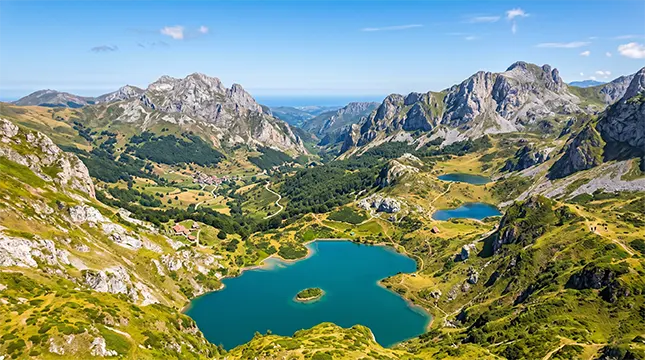
Venture inland to discover breathtaking glacial lakes, dramatic volcanic coastlines, and the stunning peaks of the Pyrenees.
Most people who move to Spain eventually discover that what keeps them enchanted long after the novelty of the weather has settled is the sheer natural variety of the country.
The coastline gets all the attention, but the interior rewards those who venture into it with landscapes that are genuinely breathtaking.
Somiedo Natural Park in Asturias is a UNESCO Biosphere Reserve of glacial lakes, ancient forests, and wandering Cantabrian brown bears, the kind of place that makes you feel the world is much larger and wilder than you remembered.
In Andalusia, Cabo de Gata-Níjar Natural Park protects a volcanic coastline of dramatic rock formations, hidden turquoise coves, and almost no development.
The Pyrenees in the north offer serious hiking and winter skiing, while the Sierra Nevada near Granada delivers Europe’s southernmost ski resort within an hour of Mediterranean beaches.
Getting out into Spain’s wild spaces is one of the great pleasures of living there. Make a point of exploring beyond your immediate neighbourhood, and the country will keep surprising you for years.
26. How White & Company Can Help You Make the Move

Moving internationally is one of the most logistically complex things most people ever undertake, and having the right removal partner makes a genuine difference to how smoothly it all goes.
White & Company has been helping people relocate across the UK and internationally for over 150 years, and Spain is one of our most experienced and regularly served routes.
We offer both full-load and groupage (shared load) services to Spain, with professional packing options, full customs documentation support, and a team that understands the specific challenges of cross-border moves.
As founder members of the British Association of Removers (BAR), you benefit from industry accreditation and a level of consumer protection that gives real peace of mind.
Whether you are moving a studio flat or a five-bedroom family home, our priority is making sure your belongings arrive safely and on time so you can focus on settling into your new life.
We also offer secure storage solutions if your move-in date and shipping date do not quite align.
To find out more or get a no-obligation quote, call us on 01489 663018, email hq@whiteandcompany.co.uk, or
request a quote online, and one of our experienced team members will be in touch.
Your exciting journey to a new life in Spain starts here.
Moving to Spain from the UK Frequently Asked Questions
- Can I still access my UK pension if I move to Spain?
Yes, your UK State Pension can be paid into a UK or Spanish bank account. It will also increase annually under the “triple lock,” even while living in Spain. - Do I need a Spanish driving licence immediately after moving?
No. You can use your UK licence for up to 6 months after becoming a resident. After that, you must exchange it for a Spanish licence. - Is it better to ship all belongings or start fresh in Spain?
It depends on value and sentiment. Shipping large furniture can be costly, so many people bring essentials and buy locally once settled. - Will I need to register with local authorities after arriving?
Yes. You will need to register on the padrón (local town hall register), which is essential for accessing healthcare, schools, and other services. - Can I live in Spain part-time without becoming a tax resident?
Yes, as long as you spend fewer than 183 days per year in Spain. Go over that, and you are likely to be considered a tax resident. - How easy is it to integrate into Spanish communities as a Brit?
It varies. In expat-heavy areas, it is very easy. In more traditional regions, learning Spanish and engaging locally makes a huge difference.

Max is a seasoned writer and blogger in the real estate and home moving sectors, as well as a knowledgeable source of information for expatriates living and working abroad. His detailed insights have helped thousands of people move and live abroad with greater simplicity and ease.

Posted in: News
Leave a Comment (0) ↓