
Best Places to Live in Guernsey – A New Resident’s Guide 2026

Thinking about moving and looking for the best places to live in Guernsey?
It is one of the smartest lifestyle decisions a UK professional can make in 2026.
This compact Channel Island continues to draw people away from the mainland with a rare combination: a mild, sunny climate, low crime, and a tax system that genuinely rewards hard work.
A flat 20% income tax rate, no Capital Gains Tax, no Inheritance Tax and no VAT means your take-home pay stretches further here than almost anywhere else in the British Isles.
Guernsey is not one uniform place, though. Its ten parishes each have a distinct character, ranging from the harbourside energy of the capital to the wind-scoured cliffs of the far southwest.
Picking the right one shapes everything about your day-to-day life on the island, so this guide walks through each parish honestly, then covers the practical essentials, property, tax, commuting, schools and healthcare.
One thing worth understanding before you start viewing homes: Guernsey runs two separate property markets.
The Local Market is reserved for people with established residency rights, while the Open Market is the route most newcomers use to buy or rent.
Open Market homes, roughly 1,600 properties spread across every parish, carry a premium over Local Market equivalents, but owning or renting one grants the right to live and work on the island indefinitely, with no wealth tests attached. If you are seriously looking to move to Guernsey, this is unlikely to be a surprise for you.
Those moving to take up a specific job may also gain access to the Local Market through an Employment Permit.
Let’s take a look at some of the best places to live in Guernsey.
A Short Overview of This Blog
Guernsey’s mix of low tax, coastal living and close UK links keeps drawing new residents in 2026, but choosing the right parish and understanding the local systems takes some homework. Here is what this guide covers.
- Ten parish profiles, an honest look at St Peter Port, St Martin, Castel, Vale, St Sampson, St Saviour, St Andrew, Forest, Torteval and St Pierre du Bois, and who each suits best.
- Property market in 2026, current Local and Open Market prices, how the two systems differ, and what recent policy changes mean for buyers.
- Tax advantages, the flat 20% rate, personal allowances and tax caps that make Guernsey attractive to relocating professionals.
- Commuting and connectivity, flight routes, ferry links and how realistic it is to travel to and from the UK mainland regularly.
- Schools, healthcare and moving support, what families need to know, and how White & Company’s Guernsey depot can help with the practical side of relocating.
Whichever parish catches your eye, understanding how Guernsey’s property market, tax system and transport links fit together will make settling in a great deal smoother.
St Peter Port: Island Life with an Urban Edge
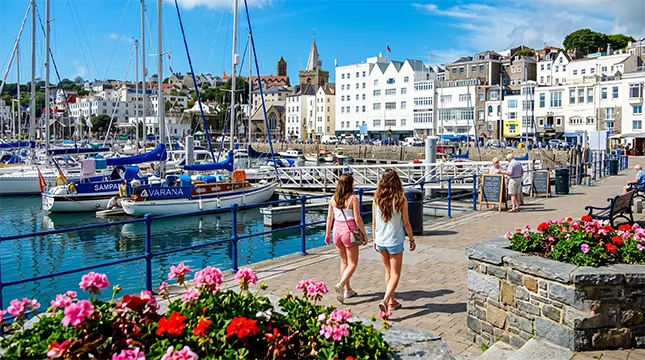
The vibrant capital of Guernsey. Experience Georgian elegance, a bustling working harbour, and excellent independent dining in the island’s commercial hub.
For most newcomers, Guernsey begins in St Peter Port, and it is easy to see why the town leaves such a strong first impression.
Georgian terraces spill down the hillside to a working harbour crowded with yachts and ferries, and the whole scene has a lived-in elegance that photographs never quite capture.
As the island’s commercial and cultural centre, the parish is packed with independent shops, restaurants and bars, most clustered around the town centre and waterfront. The weekly Farmers’ Market at Market Square remains a genuine local institution, and a good gauge of how seriously islanders take fresh, local produce.
St Peter Port is also Guernsey’s transport hub. Condor Ferries sails from the harbour to Poole, Portsmouth and Saint Malo, and the airport is a short drive away, so it suits anyone who travels for work.
Close to a third of the island’s population lives here, which brings density and buzz but also strong competition for housing.
Expect to pay well above the island average for anything centrally located, in exchange for being able to walk to almost everything you need.
St Martin: Clifftop Drama and Countryside Calm
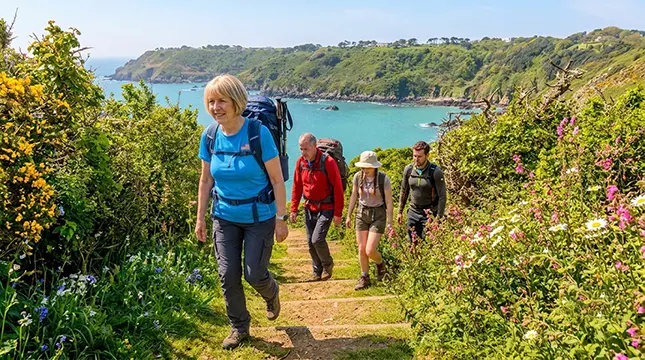
Dramatic southern coastal living. Walk the breathtaking cliff paths to Moulin Huet Bay while remaining just a short drive from St Peter Port’s amenities.
Just south of the capital, St Martin feels like a different island altogether. This is where Guernsey’s dramatic southern coastline comes into its own, with cliff paths cutting through heathland to secluded coves.
Moulin Huet Bay is the best known of these, its rock pools and turquoise water having once captivated the painter Renoir, and it still draws walkers and families in every season.
The parish sits on Guernsey’s excellent network of coastal walking trails, giving residents easy access to some of the best scenery on the island without needing the car. St Martin balances rural calm with genuine convenience, close enough to town for dinner out yet peaceful enough to feel like a proper retreat.
Its schools are well regarded, making the parish popular with families, and there is no shortage of good pubs with clifftop views. Property here rarely stays on the market long.
Castel: Family-Friendly and Full of Character
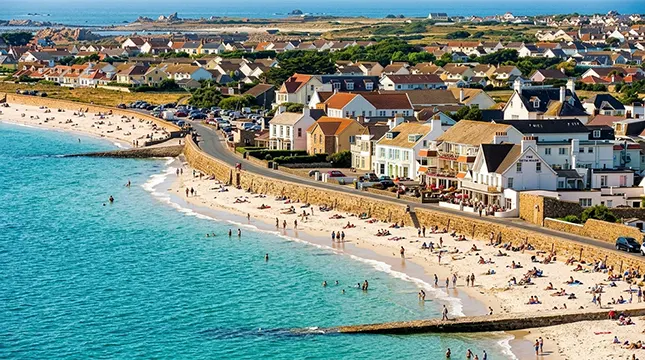
The perfect parish for growing families. Enjoy wide sandy beaches at Cobo Bay and extensive green space at Saumarez Park in Guernsey’s largest parish.
Castel is Guernsey’s largest parish by area and arguably its most well-rounded, combining beaches, green space, good schools and a genuine village feel. It consistently ranks among the most popular parishes for families relocating from the mainland.
Cobo Bay, on the west coast, is one of the island’s best-loved beaches, its wide sands and reliable sunsets making the pub and café that overlook it a fixture of warm evenings.
Inland, Saumarez Park offers the kind of open green space city dwellers rarely get close to, along with the National Trust of Guernsey Folk Museum.
Housing ranges from traditional granite farmhouses to modern family homes, and the wider mix of stock compared with St Peter Port means Castel often delivers better value for the extra bedroom or garden families are after.
Vale: Where the North Coast Opens Up
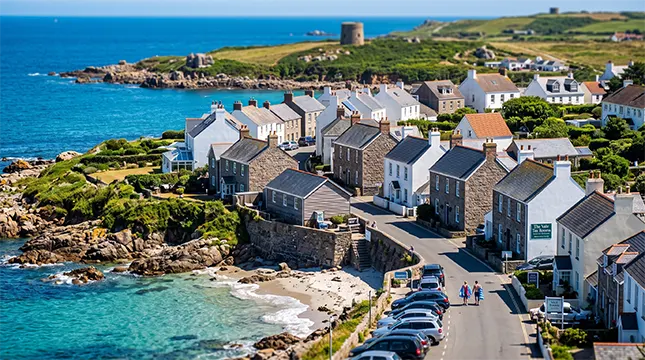
Sweeping sandy beaches in the north. Discover L’Ancresse and Pembroke bays, alongside excellent value housing popular with younger island buyers.
Occupying the island’s northern tip, Vale has a character all its own, more open and less obviously photogenic than the southern parishes, but with beaches that feel a little less discovered. L’Ancresse Bay and Pembroke Bay together form a long, sweeping arc of sand ideal for swimming and walking, and L’Ancresse Golf Club sits right on the headland above them.
Vale Castle, a medieval fortification looking out towards Herm and Sark, adds a strong dose of history.
Vale also tends to be more affordable than the central and southern parishes, which makes it popular with younger buyers and anyone chasing more space for their budget.
Local amenities and schools are solid, and the sense of community is strong, so it is well worth a look for coastal living without a premium postcode price tag.
St Sampson: Regeneration and Maritime Heritage
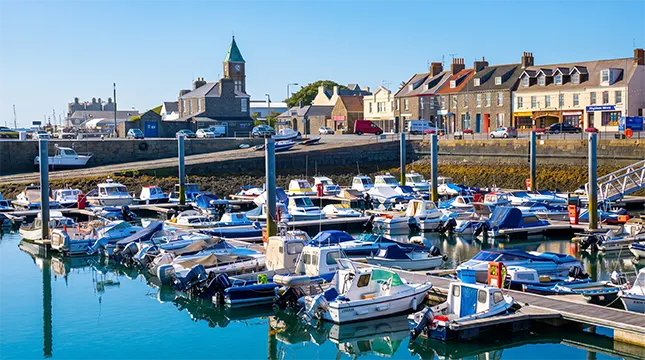
Guernsey’s industrial and maritime heart. Explore the revitalised Bridge commercial strip and waterfront marina in this accessible and affordable parish.
Guernsey’s second town and its industrial heartland, St Sampson centres on the island’s main commercial port.
It might not be the first parish that comes to mind for newcomers, but there is real appeal here for anyone drawn to a working waterfront and a slightly less polished slice of island life.
The Bridge, the parish’s main commercial strip, has a growing run of cafés, restaurants and independent shops, and the marina has brought new energy and attractive spaces for walking.
Meaningful investment in regeneration over recent years has genuinely shifted the character of the area.
Property tends to be more accessible here than in the southern parishes, and transport links into St Peter Port are good, making it a sensible choice for buyers who want to be near practical amenities without needing to live on the cliffs.
St Saviour: The Quiet Heart of the Island
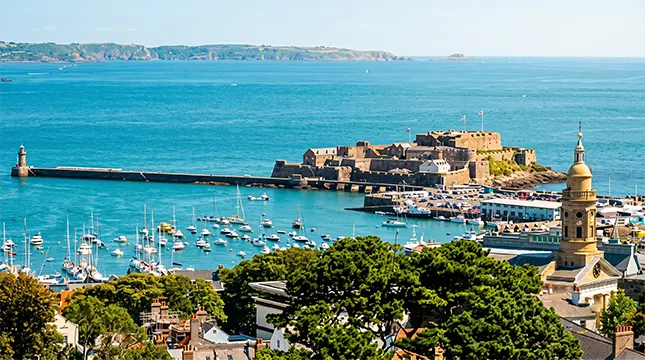
Retreat to a traditional granite farmhouse surrounded by peaceful farmland and the scenic trails of St Saviour’s Reservoir.
If unhurried is what you are after, St Saviour delivers it.
This central parish is largely farmland and quiet lanes, with a pace of life that feels properly removed from the modern world, yet it remains within easy reach of both the capital and the west coast beaches.
The nature trail around St Saviour’s Reservoir is a favourite with walkers and birdwatchers, and ancient Neolithic dolmens scattered across the parish are a striking reminder of just how long people have chosen to live here.
The housing stock leans towards traditional granite farmhouses and country cottages, many sensitively modernised.
If your idea of a good evening involves a stroll through green fields followed by dinner made from local produce, St Saviour will suit you well.
St Andrew: Landlocked and Wonderfully Peaceful
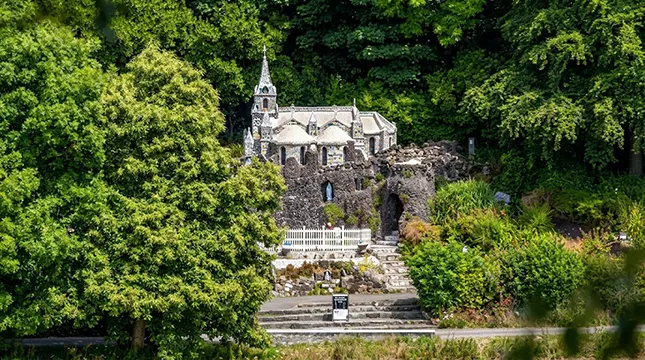
The community heart of Guernsey. Enjoy rolling fields, ancient hedgerows, and quiet country lanes in the island’s only landlocked parish.
St Andrew holds the unusual distinction of being Guernsey’s only landlocked parish, and rather than being a drawback, this has given it a genuinely inward-looking, rural character.
Rolling fields, ancient hedgerows and quiet lanes define the landscape, and the parish is sometimes described as the heart of Guernsey, not just in location but in community spirit.
It sits close enough to St Peter Port for a practical commute, yet far enough to feel properly removed from town.
Walking and cycling routes thread through the countryside, and good period homes come to market only occasionally, so patience pays off for anyone set on settling here.
Forest: Elevated Views and Easy Airport Access
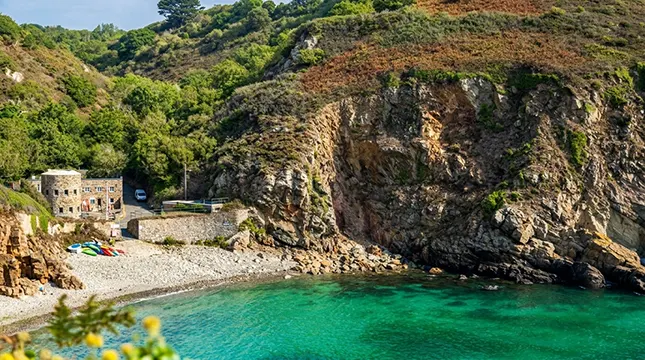
Convenient travel and secluded coves. Balance immediate access to Guernsey Airport with the quiet, tucked-away beauty of Petit Bot Bay.
One of Guernsey’s smaller parishes, Forest sits on high ground in the south with the airport on its doorstep, a genuine practical advantage for anyone who travels regularly.
Flight noise is less intrusive than the island’s compact scale might suggest. The south coast cliffs are close by, including the tucked-away Petit Bot Bay, a sheltered cove reached down a wooded valley that still feels like a well-kept secret.
Cliff paths on either side offer walking with views stretching to France on a clear day.
The parish has a tight community, a pub or two, and homes that tend towards cottages and detached houses with gardens. The blend of scenery, seclusion and airport convenience keeps demand consistently high.
Torteval: Wild, Remote and Utterly Distinctive
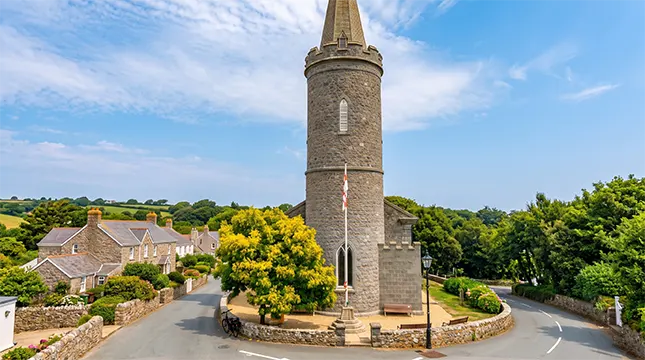
Rugged landscapes in the far southwest. Secure a rare property in Guernsey’s smallest parish and enjoy windswept headlands and dramatic walking trails.
Guernsey’s smallest parish is also one of its most distinctive. Tucked into the far southwest, Torteval is defined by rugged cliff paths and windswept headlands, home to some of the best walking on the island.
The round-towered Torteval Church, with the tallest steeple on Guernsey, is the landmark most associated with the parish.
This is not the parish for anyone wanting neighbours close at hand or a shop on the corner.
Properties here rarely come to market, and when they do, they attract buyers who have deliberately set their sights on this corner of the island and are prepared to pay for the privilege.
Retirees and remote workers are particularly drawn to Torteval’s sense of being genuinely apart from everything else.
St Pierre du Bois: A Western Parish Worth Discovering
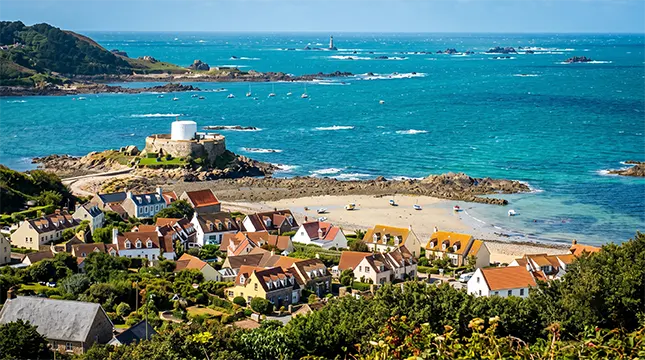
Strong community and coastal access. Explore the broad sands of Rocquaine Bay and enjoy a genuine village atmosphere away from heavy tourist footfall.
Known locally as St Peter’s, this western parish blends farming country with coastal access and a proper community feel, away from the heavier tourist footfall of some other areas.
Rocquaine Bay, forming the parish’s western boundary, is a broad, windswept beach quite different in character to the sandy bays further north, and Fort Grey, a Martello tower just offshore, houses the Shipwreck Museum. The Rocquaine Regatta each summer draws a big local crowd.
Homes range from traditional granite cottages to more modern builds, and the parish tends to offer slightly better value than comparable rural areas closer to the capital, making it a solid option for anyone who wants to feel part of island life without being at its centre.
Guernsey’s Property Market in 2026
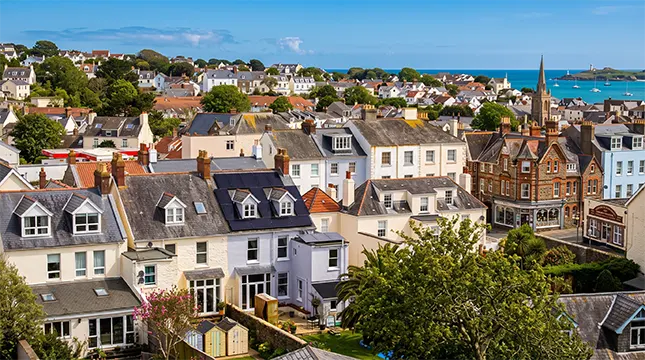
Understand the difference between Local Market housing and the 1,600 Open Market properties available to independent newcomers.
Guernsey’s property market works quite differently to anywhere on the UK mainland, and understanding the basics before you start viewing will save you time.
Local Market properties make up the vast majority of housing stock and are restricted to people with established residency rights or an Employment Permit tied to a specific job.
The Open Market, roughly 1,600 properties spread across all ten parishes, is the main route to residency for independent newcomers, and buying or renting a Part A Open Market home grants the right to live and work on the island indefinitely with no minimum wealth requirement.
The market has picked up pace through early 2026. According to the States of Guernsey’s latest Residential Property Prices Bulletin, the mix adjusted average purchase price for Local Market properties reached £604,094 in the first quarter of 2026, up 1.4% on the previous quarter and 4.1% higher than the same period a year earlier, a genuine return to growth after prices had softened through much of 2024 and 2025.
Over five years, Local Market prices have risen around 18.5%. Rental prices have climbed even further, up to a mix adjusted average of £2,170 a month, some 45% higher than five years ago.
Open Market properties, being fewer in number and typically larger, commanded a median realty price of £1,494,188 in the same quarter.
A significant policy change also landed in 2025: the Open Market Housing Register (Guernsey) (Amendment) Law introduced more flexibility in how properties move on and off the Open Market Register, making it easier for long-standing Open Market residents to downsize into a smaller Local Market home and free up larger properties further up the chain.
The change was broadly welcomed as a step towards better transparency and liquidity in what has always been a tightly constrained market.
Anyone budgeting for a purchase should factor in document duty, Guernsey’s equivalent of stamp duty, alongside proper local legal advice early in the process, since the local conveyancing system differs from England and Wales in several respects.
The Tax Appeal Behind the Move
For many people, Guernsey’s tax system is the single biggest reason the move makes financial sense, and it is refreshingly simple. Guernsey applies a flat 20% income tax rate to all residents, regardless of how much they earn.
The personal allowance for 2026 is £15,200, and there is no Capital Gains Tax, no Inheritance Tax, no Stamp Duty and no VAT or equivalent.
Higher earners can elect to cap their overall tax liability at £160,000 on non-Guernsey source income, rising to £320,000 if the cap is applied to worldwide income. A separate new arrivals cap of £60,000 is available for the first three years of residency to those who purchase Open Market property valued above £1.5 million.
Company owners benefit too, with a standard 0% corporate tax rate applying to most trading businesses, with higher rates reserved for specific sectors such as financial services.
It is a genuinely transparent system compared with the UK, but it is still worth taking qualified local tax advice to understand exactly how it applies to your own circumstances before you commit to a move.
Getting To and From Guernsey: Commuting and Connectivity in 2026
One of the first questions anyone considering Guernsey asks is how easy it actually is to get back to the mainland, whether for work, family or simply a weekend away. The honest answer in 2026 is easier than most people expect, provided you plan around the island’s flight and ferry schedules rather than against them.
Guernsey Airport remains the main gateway, with Aurigny operating the bulk of scheduled flights alongside British Airways. London Gatwick is the busiest route, with multiple daily departures during peak season and a flight time of around fifty minutes, short enough to make an occasional commute genuinely workable.
Regular services also run to London City, Southampton, Manchester, Birmingham, Bristol and Edinburgh, with seasonal links to Jersey, Paris and Dublin. Fares to Gatwick can start from under £50 one way if booked ahead, though prices climb quickly closer to departure and during school holidays.
By sea, Condor Ferries connects St Peter Port to Poole, Portsmouth and Saint Malo, with the fast craft taking around three hours to Poole. It is a popular option for anyone moving a car, bringing pets, or simply preferring not to fly, and it remains a practical way to bring larger items over ahead of a full house move.
Worth noting for anyone new to the island, both fog and low cloud can affect flight schedules, particularly in spring and early autumn, and ferry sailings are tide dependent if you are connecting onward to Herm, Sark or Alderney.
Building in a little buffer time around travel plans, especially in shoulder seasons, avoids most of the frustration. For most professionals who need to be in London or the south coast reasonably often, a combination of the Gatwick air link and the Poole ferry route make Guernsey a genuinely realistic base, not just an occasional escape.
Schools and Education for Relocating Families

Explore the new comprehensive secondary school system and the soon-to-open Les Ozouets post-16 campus.
Guernsey’s state education system has changed significantly in recent years, and it is worth understanding the current setup if you are moving with children.
Primary education runs from age five to eleven across fifteen state-maintained schools, with places largely allocated by catchment area, so where you choose to live will directly affect which primary school your children attend.
Secondary education was restructured following a States of Guernsey decision in 2021 to move away from the old selective grammar school model.
Since September 2025, there are three comprehensive schools for ages eleven to sixteen, Les Varendes, Les Beaucamps and St Sampson’s High, alongside two additional learning needs schools.
The Sixth Form Centre relocated to its own site at La Mare de Carteret from September 2025, and a new post-16 campus at Les Ozouets is currently under construction, which will eventually bring the Sixth Form Centre together with The Guernsey Institute, the island’s further education and vocational training provider, on one purpose-built site.
Families who prefer an independent option have three colleges to choose from on the island, and some also opt for boarding education back on the UK mainland.
Healthcare: What to Expect as a New Resident

Accessing medical services in Guernsey. Understand the private primary care system and how consultant-led hospital care is delivered outside the NHS structure.
Guernsey sits entirely outside the NHS structure, so some assumptions about free healthcare at the point of use will not apply once you move.
GP appointments, A&E visits, ambulance callouts and dental care are all delivered privately and involve a charge. In practice, most residents find the costs manageable, and appointment availability is noticeably less stretched than in many parts of the UK.
Specialist and hospital care works differently. The Medical Specialist Group provides consultant-led care at the Princess Elizabeth Hospital, free at the point of use for residents registered for social security contributions, following a GP referral.
Because the island has no junior doctors, every specialist appointment is with a fully qualified consultant, a genuine benefit of Guernsey’s smaller scale, and waiting times for most non-urgent specialities sit at around eight weeks or under.
The hospital itself has been undergoing modernisation, with a new Critical Care Unit opening in early 2025 as the first phase of a wider upgrade programme.
Treatment not available locally is commissioned in Jersey or the UK, largely covered under the island’s healthcare contract. Many new arrivals still choose to take out private medical insurance, mainly to cover GP costs and add a bit of flexibility.
Planning Your Move to Guernsey with White & Company
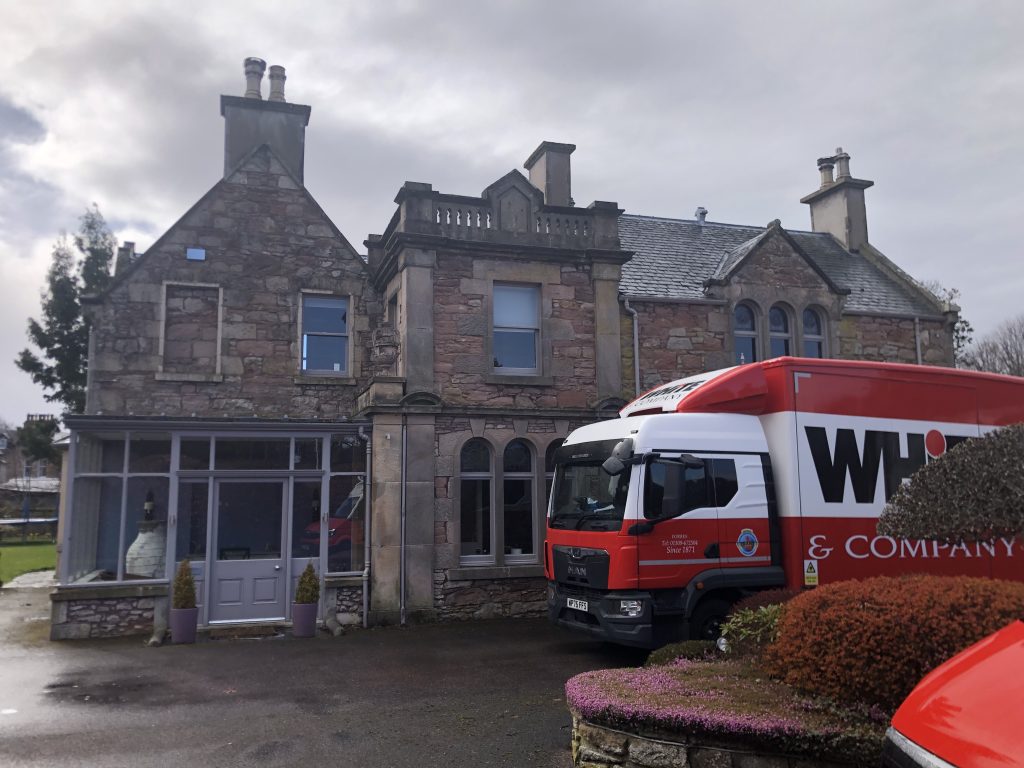
Wherever you choose to settle on the island, getting your belongings there safely is where White & Company comes in. The team’s dedicated Guernsey depot in St Peter Port has genuine local knowledge of every parish and handles door to door removals and secure storage tailored to each individual move.
As a long-standing member of the British Association of Removers, White & Company operates to strict professional standards, so your belongings are in safe, experienced hands whether you are coming from the mainland, returning from overseas, or moving within the Channel Islands.
A free video survey means the team can assess your move remotely without disrupting your day, and packing, protective wrapping, furniture reassembly and storage are all covered under one roof.
If you are weighing up the overall cost of your move alongside the property side of things, our 2026 guide to the cost of moving house breaks down what to budget for, from removals through to legal fees and stamp duty equivalents.
To get a fast, free, no-obligation quote, call the Guernsey depot on 01481 736868, located in St Peter Port, directly or fill in the online quote form. The team is ready to make your move to Guernsey a smooth one.
Frequently Asked Questions
How long before moving abroad should I start planning?
Ideally, give yourself at least six months for an international or island move. Visa or residency applications, property searches and shipping arrangements all take longer than a domestic move and building in extra time reduces last minute stress considerably.
Do I need to sell my UK home before I can relocate?
Not necessarily, though your finances and mortgage situation will usually dictate the practical answer. Many people rent for the first year in a new country or island to get a proper feel for different areas before committing to a purchase.
What is the best way to move belongings overseas or to an island?
A specialist international or Channel Islands removals company that is a member of the British Association of Removers is generally the safest route, since they understand customs processes, shipping logistics, and insurance in a way a general courier cannot.
How do I handle currency and banking when relocating?
Opening a local bank account as early as possible and using a specialist foreign exchange provider rather than a high street bank for any large transfers, will usually save a meaningful amount of money over the course of a move.
What should I do about healthcare cover before I relocate?
Research how the healthcare system works in your destination well before you move, register with a GP or equivalent as soon as you arrive, and consider private medical insurance if the local system differs significantly from what you are used to.

Max is a seasoned writer and blogger in the real estate and home moving sectors, as well as a knowledgeable source of information for expatriates living and working abroad. His detailed insights have helped thousands of people move and live abroad with greater simplicity and ease.

Posted in: News
Leave a Comment (0) ↓