
First-Time Buyer’s Guide to Moving Home: What Happens After Your Exchange

Are you looking for a first-time buyer’s guide to moving home? If so you’re in the right place!
Buying your first home is exciting, but if you are a first-time buyer, the period between exchange and completion can feel a little overwhelming.
After months of searching, viewings, paperwork, and waiting, exchanging contracts is a huge achievement. However, before you can collect the keys and move in, there are still several important jobs to tick off.
The good news is that with a little planning, the process can be far less stressful. In this guide, we explain what happens after exchange, what you need to arrange before completion, and how to prepare for a smooth and successful moving day.
Our guide walks through exactly what happens between exchange and completion, what you need to organise, and how to make sure your first-ever “moving in day” goes as smoothly as it possibly can.
A Short Overview of This Article
We cover the practical steps every first-time buyer needs to take once contracts are exchanged, right through to settling into your new home (hopefully not for some time)!
Use the points below to jump to what matters most to you or read straight through for the full picture.
- Exchange versus completion: what each stage actually means and why the gap between them matters.
- The completion timeline: what your solicitor, lender, and estate agent are doing behind the scenes.
- Booking your removals: why early booking matters most during the busy autumn moving season.
- Costs to budget for: Stamp Duty, removals, and the smaller expenses first-time buyers often overlook.
- Packing and preparing: a realistic timeline for getting ready in the days leading up to completion.
- Completion day itself: what actually happens, hour by hour, and when you get your keys.
- Settling in: the practical jobs to tackle in your first week as a homeowner.
By the end, you should know exactly what to expect and what to do next. Most of the hard part, the legal side, is already behind you.
Exchange and Completion: What is the Difference?
These two terms often confuse new buyers. It is worth being clear on the difference, because the two get used interchangeably, but they are not the same thing at all.
Exchange of contracts is the point at which the sale becomes legally binding.
Both you and the seller sign identical contracts, your solicitor transfers your deposit, and from that moment neither side can pull out without serious financial consequences.
According to MoneyHelper, the gap between exchange and completion is typically between seven and twenty-eight days, though it varies depending on what suits everyone involved.
Completion is the day the remaining balance of the purchase price is transferred, ownership officially passes to you, and you collect the keys. This is moving day.
Most first-time buyers, particularly those without a chain to coordinate, settle on a gap of around one to two weeks.
This gives your lender time to release mortgage funds, which usually takes about five working days, and gives you a realistic window to book removals and organise the practical side of your move.
What Happens Behind the Scenes Before Completion

While you prepare to pack, your conveyancing solicitor manages pre-completion searches and your lender releases funds.
Once you have exchanged, there is still work going on in the background, even though it can feel like a quiet period from your side.
- Your conveyancing solicitor finalises the transfer documents and prepares to submit your Stamp Duty Land Tax return.
- Your mortgage lender releases the funds to your solicitor ahead of the completion date, usually a few working days before.
- Your solicitor carries out final pre-completion searches to confirm nothing has changed since exchange.
- The seller’s solicitor confirms removal arrangements at the property you are buying, including when it will be vacated.
There is genuinely very little for you to do legally during this window. That makes it the ideal time to focus entirely on the physical move itself.
Book Your Removals as Early as Possible

Book a free home survey with White & Company immediately after exchange to guarantee your slot during busy seasonal periods.
September is one of the busiest months of the year for removals companies.
Many buyers who exchanged over the summer are now approaching completion at the same time, which means removal slots in this period get booked up quickly.
As one of the UK’s longest established removals companies, White & Company has helped people move home since 1871, and our teams are used to working to the kind of tight, sometimes shifting timelines that come with a first house purchase.
As soon as your exchange date is confirmed, get in touch and book your move. Here is what to share with your removals company at this stage.
- Your confirmed or likely completion date, even if it is still provisional.
- The size of your current property and an idea of how much you are moving.
- Any access issues at either property, such as narrow streets, flats with no lift, or restricted parking.
- Whether you would like a full packing service or plan to pack yourself.
Every White & Company move begins with a free, no-obligation home survey, either in person or via a video survey you can complete yourself. This is the best way to get an accurate quote and ensure the right-sized vehicle and crew are allocated to your move.
If you would rather not pack everything yourself, it is worth looking into a professional packing service.
For a first move in particular, having an experienced team handle the wrapping and boxing of fragile or awkward items takes a huge amount of pressure off.
Budgeting for the Costs You Might Not Expect

Managing your property moving expenses. Remember to account for Stamp Duty Land Tax, buildings insurance, and professional packing services ahead of completion.
First-time buyers often budget carefully for the deposit and the mortgage but forget or just don’t realise about other costs that crop up between exchange and completion.
Stamp Duty Land Tax is one of the bigger ones.
As a first-time buyer in England or Northern Ireland, you will not pay any Stamp Duty on the first £300,000 of the purchase price, with a discounted rate applying up to £500,000.
Above £500,000, the relief does not apply, and standard rates are charged instead.
The current rates and thresholds are set out clearly on GOV.UK, and your solicitor will usually handle the return and payment on your behalf, though it remains your legal responsibility to make sure it is paid correctly.
- Removals costs, which vary depending on distance, volume, and whether you choose a packing service.
- Buildings insurance, which needs to be active from the moment you exchange, not from completion.
- Final meter readings and any deposits required to set up new utility accounts.
- Small essentials for the first night, from light bulbs to a kettle, which are easy to overlook until you need them.
Setting aside a modest contingency fund upfront for these extras will save you any last-minute stress in the final fortnight.
Preparing for Moving Day: A Realistic Timeline

Staying organised before the big day. Use a structured packing checklist and remember to redirect your Royal Mail post a few days before you relocate.
With your completion date set and your removals booked, here is a sensible run of jobs to work through in the lead-up.
- Two to three weeks before, start using up food from the freezer and begin sorting through belongings you no longer need.
- One to two weeks before, begin packing non-essential rooms and label every box clearly with its destination room.
- One week before, confirm your removals time with White & Company and arrange a parking suspension if either property requires one.
- A few days before, notify your bank, employer, and any subscriptions of your new address, and arrange mail redirection with Royal Mail.
- The day before, pack an essentials box with chargers, medication, important documents, and basic kitchen items, and keep it separate from everything else.
Our full moving checklist covers this in more detail and is worth working through properly rather than relying on memory in a busy week.
What Actually Happens on Completion Day
Completion day can feel uncertain if you have never been through it before, so here is roughly how it unfolds.
In the morning, your solicitor confirms with the seller’s solicitor that all funds have been received. This can sometimes take until early afternoon, particularly if you are part of a chain, so try not to plan removals to arrive at the property before you have confirmation that completion has happened.
Once funds have cleared and your solicitor has confirmed completion, the estate agent will release the keys, usually to you directly or to your solicitor for collection.
From that point, the property is legally yours and your removals team can begin unloading.
Occasional delays do happen, often due to banking processing times rather than anything going wrong.
A reliable removals company will build some flexibility into the day and keep your belongings safe if there is a short wait.
If the worst happens and you need temporary storage for a few days, don’t panic! Storage here can be a lifesaver.
At White & Company, we have our own secure storage facilities ready to utilise should you need to bridge this gap.
Take a look at our dedicated article about using storage during a house move, it’s a very straightforward process and really does take the strain out of this all-too-common situation.
Settling In During Your First Week
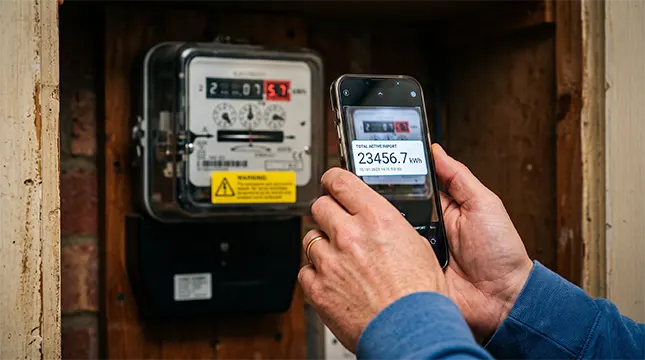
Take your final utility meter readings, locate your stopcock, and register for council tax as soon as the removal van departs.
Once the boxes are in and the vehicle has gone, there are a handful of practical jobs worth tackling early rather than letting them slide.
- Take final meter readings on day one and register with your chosen energy and water suppliers.
- Register for council tax with your new local authority as soon as possible.
- Update the electoral roll and your driving licence address.
- Locate the stopcock, fuse box, and boiler controls so you know where they are before you need them in a hurry.
Give yourself permission to unpack gradually. Most new homeowners find it takes a good few weeks if not months, to feel properly settled, and that is entirely normal.
Moving with White & Company

Trusted UK removals since 1871. Rely on a fully BAR-accredited team to safely transport your belongings and manage tight first-time buyer completion deadlines.
White & Company has 19 branches spread across the UK, from Forres in Scotland down to Southampton on the south coast. Our crews are experienced in working to tight, sometimes shifting, completion dates that come with a first-time house purchase.
Plus, as a founder member of the British Association of Removers we operate to recognised standards of service, and every move begins with a free survey and a written quotation, so you know exactly what to expect.
If your exchange date is confirmed and you are now looking ahead to completion, get in touch for a free quote and let us help take the pressure off your first move.
First-time Buyer’s Guide to Moving Home: Frequently Asked Questions
Q: What time should I expect the removal team to arrive on moving day?
A: Most professional removals companies aim to arrive between 7:30 am and 9 am, depending on the size of the job and the distance involved. You’ll usually be given an estimated arrival window when your booking is confirmed. For larger moves or those requiring packing on the same day, an earlier start is common.
Q: Can I still be in the house while the team is loading?
A: Absolutely — and in fact, it’s best to be present, especially at the start. The team leader may need to ask you questions about specific items, and you’ll want to be on hand to direct the crew. That said, once the main walkthrough is done, many customers find it less stressful to stay in one room or outside while the bulk of the work is carried out.
Q: What happens if my new home isn’t ready to move into on the day?
A: It does happen — usually because of delays in the legal completion process. In these situations, your removal company can arrange to hold your belongings in secure short-term storage while things are resolved. It’s worth asking your removals company in advance about their contingency arrangements so you’re not caught off guard.
Q: Should I tip the removal team?
A: There’s no obligation, but tips are always appreciated if you feel the team has done an excellent job. More importantly, offering refreshments throughout the day, tea, coffee, cold drinks, and perhaps a sandwich at lunchtime, goes a long way and is considered good form. It’s a long, physical day for the crew.
Q: What items are removal companies not allowed to carry?
A: Most removal companies will not transport hazardous materials such as gas canisters, paints, solvents, ammunition, or certain cleaning chemicals. Perishable food, plants, and some pets may also be excluded. Your removals company should provide you with a full list of prohibited items ahead of moving day, so check in advance if you’re unsure about anything specific.

Max is a seasoned writer and blogger in the real estate and home moving sectors, as well as a knowledgeable source of information for expatriates living and working abroad. His detailed insights have helped thousands of people move and live abroad with greater simplicity and ease.

Posted in: News
Leave a Comment (0) ↓