
Living in Dubai: A 2026 Relocation Guide

Are you moving abroad and considering living in Dubai, but want to know more about it?
Dubai has always done things on a grand scale. From record-breaking architecture to tax-free salaries and sun-drenched winters, the city has long captured the imagination of people looking for something beyond the ordinary.
In 2026, that magnetic pull is stronger than ever, with a growing number of British and European families, professionals, and entrepreneurs choosing Dubai as their permanent base.
Whether you are drawn by career ambitions, a desire for year-round warmth, or the appeal of a genuinely cosmopolitan lifestyle, relocating to Dubai is one of the most rewarding decisions you can make.
It is also one that rewards careful preparation.
This guide covers everything you need to know before you make the move, from updated visa categories and the expanded Golden Visa scheme to customs regulations, housing options, schooling, and the everyday realities of life in the UAE.
For expert help with your international move, visit White & Company’s UAE removals service.
Living in Dubai in 2026: Quick Guide to What You’ll Learn
Our extensive guide covers the essentials, from visas and housing to jobs, healthcare, and shipping your belongings. Here is what you will learn:
- Understanding Everyday Life in Dubai – Discover what daily life, transport, climate, and expat living are really like.
- Navigating Visas and Residency in 2026 – Explore the latest residency routes, including work, retirement, and remote worker visas.
- The UAE Golden Visa: 2026 Updates – Learn who qualifies and what has changed under the latest Golden Visa rules.
- Housing and Neighbourhoods – Compare Dubai’s most popular areas and find the right location for your lifestyle.
- Working in Dubai – Understand the job market, salaries, workplace culture, and employment opportunities.
- Cultural Etiquette and Local Laws – Learn the key customs, regulations, and social expectations for new residents.
- Moving Your Belongings to Dubai – Find out about customs rules, restricted items, shipping options, and required paperwork.
- Education, Healthcare and Everyday Essentials – Explore schools, medical services, banking, and daily living costs.
- Leisure, Travel and Making the Most of Life in the UAE – Discover attractions, activities, and travel opportunities across the region.
- Why Choose White & Company for Your Move to Dubai? – See how professional removals support can simplify your relocation.
- Frequently Asked Questions About Moving Abroad – Get quick answers to common questions about relocating to Dubai.
With the right planning and expert support, moving to Dubai can be a smooth and rewarding new chapter.
Understanding Everyday Life in Dubai
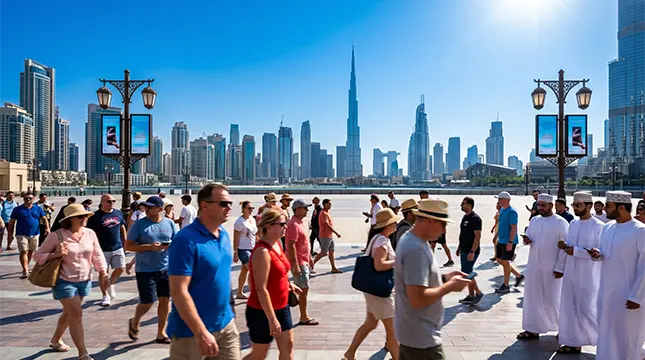
Learn how excellent digital infrastructure, universally spoken English, and 24/7 convenience make settling in incredibly easy.
For first-time visitors to Dubai, most are struck by two things: the sheer pace of the city and the genuine ease of daily life.
English is spoken everywhere, from supermarket checkouts and hospital reception desks to boardrooms and building sites. That single fact removes an enormous barrier that expats face in many other relocation destinations.
The city is built for convenience. The roads are excellent, customer service is taken seriously across every sector, and digital infrastructure rivals anywhere in the world.
Government transactions that might take months elsewhere can often be completed online within hours.
Tap-to-pay is universal, food delivery apps are reliable and affordable, and the city genuinely runs 24/7.
Dubai is home to one of the most multicultural populations on the planet, with expatriates making up approximately 88 per cent of residents. You will find communities from the UK, India, the Philippines, Egypt, France, and dozens of other countries all coexisting in a city that thrives on its diversity.
Social connections tend to form quickly, partly because so many people arrive without an existing network and are therefore open to building one.
The weather is the one factor that requires genuine adjustment.
Winters, running from October through to April, are genuinely spectacular, with warm sunny days and cool evenings perfect for outdoor dining and beach life. Summers, however, are extreme, with temperatures regularly exceeding 42 degrees Celsius and humidity making it feel considerably hotter.
Most long-term residents plan their schedules accordingly, spending summer evenings indoors and taking advantage of the city’s world-class indoor leisure facilities.
The Dubai Metro has expanded significantly in recent years and is an efficient, affordable way to navigate the city. For broader travel, ride-hailing apps such as Careem and Uber are widely used, and taxis remain plentiful and well-regulated.
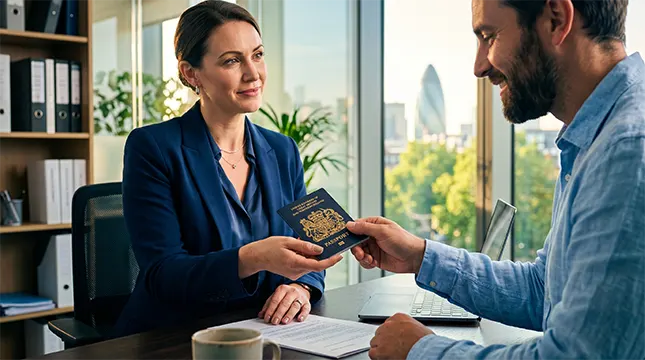
Explore employer-sponsored routes, self-sponsored remote work visas, and the five-year retirement visa for those aged 55 and over.
Understanding the visa landscape is the essential first step for any prospective Dubai resident.
The good news is that the UAE has worked hard to simplify and modernise its residency system in recent years, and 2026 brings some of the most flexible options yet.
Employer-Sponsored Residency Visa
This remains the most common route for working professionals. Your employer handles the application process, which includes a medical examination, Emirates ID registration, and the stamping of your residency visa in your passport. Residency under this route is tied to your employment, so a change of employer requires a transfer of sponsorship. Processing is typically completed within a few weeks.
Freelancer and Remote Work Visa
Introduced to attract digital nomads and independent professionals, the UAE remote work and freelancer visa allows holders to live in Dubai while working for overseas employers or clients. It requires proof of employment or self-employment income, health insurance, and a minimum monthly income threshold. The visa is typically valid for one year and is renewable, making it a practical option for those whose work does not require a UAE-based employer.
Retirement Visa
The UAE’s retirement visa is available to those aged 55 and over who meet certain financial criteria, including ownership of qualifying property, a bank deposit, or a confirmed regular income. It is valid for five years and is renewable, allowing retirees to enjoy long-term residency without requiring a sponsor or employer.
The UAE Golden Visa: 2026 Updates
The Golden Visa scheme remains one of the most talked-about elements of UAE residency policy, and 2026 has brought meaningful expansions to the programme.
The Golden Visa offers long-term residency of either five or ten years, is self-sponsored (meaning no employer or local sponsor is required), and is renewable indefinitely provided eligibility conditions are maintained.
Key categories and 2026 updates include:
- Real estate investors: Property with a minimum value of AED 2,000,000 qualifies for the 10-year Golden Visa. Importantly, as of February 2026, mortgage financing is fully accepted, and the previous requirement for a 50 per cent upfront payment has been removed. This makes the property investment route considerably more accessible.
- Skilled professionals: Those in specialised sectors such as medicine, engineering, technology, law, and finance may qualify based on a minimum monthly basic salary threshold as set by current UAE labour policy.
- Entrepreneurs: Founders of UAE-registered businesses can apply based on active ownership and participation, with both freezone and mainland structures eligible.
- Exceptional talent: Scientists, doctors, artists, athletes, and those with demonstrable achievement in their fields may qualify under this broad and deliberately inclusive category.
- Educators: Following a phased rollout, exceptional teachers in Dubai’s private education sector and other Emirates are now eligible based on measurable contributions to education quality.
- Nurses: A 2026 expansion of the programme makes nursing staff with more than 15 years of service in the UAE eligible for the Golden Visa, recognising their contribution to the country’s healthcare system.
- Content creators and digital influencers: Following the launch of the Creators HQ initiative in January 2025, eligible content creators, podcasters, photographers, and filmmakers can apply via the dedicated Creators HQ platform.
- E-sports professionals and Waqf donors: Two additional categories added in 2025 and 2026 reflect the UAE’s ambition to attract talent across all fields.
The UAE government portal provides the most up-to-date information on eligibility criteria, required documentation, and the application process for each category.
Housing and Neighbourhoods: Choosing Your New Base

Compare the waterfront buzz of Dubai Marina with the family-friendly, spacious communities of Dubai Hills Estate and Arabian Ranches.
One of the most enjoyable parts of planning a relocation to Dubai is researching where to live. The city’s neighbourhoods each have a distinct personality, and the right choice depends on your lifestyle, budget, commute requirements, and whether you are moving with a family.
- Dubai Marina is the go-to for those who want waterfront living with a vibrant social scene. High-rise apartments line a bustling promenade filled with restaurants, bars, and boutiques, and the Dubai Tram connects it seamlessly to the wider city.
- Jumeirah, stretching along the coast, offers a more laid-back beachy atmosphere with a mix of villas and apartments and easy access to some of the city’s best beaches.
- Downtown Dubai places you at the symbolic heart of the city, within walking distance of the Burj Khalifa and Dubai Mall. It is ideal for those who want an urban, design-conscious lifestyle.
- Business Bay sits adjacent to Downtown and is particularly popular with professionals for its proximity to commercial districts.
- Arabian Ranches, Mudon, and Dubai Hills Estate are ideal locations for families, offering spacious villas, excellent schools, parks, and a community feel that many expat parents find invaluable.
- Jumeirah Village Circle and Discovery Gardens remain popular with those on tighter budgets, offering good value within a reasonable distance of central Dubai.
Rental contracts typically run for one year, with most landlords expecting payment by post-dated cheques. Deposits equivalent to one month’s rent are standard. The term ‘chiller-free’ in a listing means air conditioning costs are included in the rent, which represents a significant saving during the summer months.
Browse current listings on Bayut or Property Finder to get a realistic sense of what your budget will deliver across different areas of the city.
Working in Dubai: What to Expect

Take advantage of zero personal income tax, competitive global salaries, and booming sectors in tech, finance, and green energy.
Dubai’s economy has diversified significantly over the past decade, and the job market in 2026 reflects that breadth.
Finance, fintech, technology, aviation, hospitality, healthcare, real estate, and green energy are all sectors with consistent demand for skilled professionals.
The city continues to attract major global corporations, and the UAE’s broader Vision 2031 strategy keeps investment and job creation high on the national agenda.
The absence of personal income tax remains one of the most compelling financial advantages of working in Dubai. Salaries in many sectors are competitive by global standards, and when combined with the lack of deductions, take-home pay is substantially higher than equivalent roles in the UK or Europe.
Most professional packages include private health insurance and, in some cases, school fee contributions for dependants.
Workplace culture blends international norms with local customs. Business relationships matter, and taking time to build rapport before diving straight into negotiations is valued.
Hierarchy is respected in most organisations, and dress codes in corporate environments tend toward the formal, though creative and tech sectors are considerably more relaxed.
The working week officially runs from Monday to Friday, following the calendar change introduced in 2022.
International recruitment agencies such as Michael Page UAE and Charterhouse are well-established in the market. LinkedIn remains the dominant professional networking platform. Be cautious of any role that promises a visa in exchange for upfront fees, as legitimate employers and agencies will never ask job seekers to pay for placement.
Cultural Etiquette and Local Laws
Dubai is a modern, open city that welcomes visitors and residents from every background. At the same time, it is a city with deep cultural roots, and understanding the local context makes daily life far smoother and more respectful.
- Public displays of affection are expected to remain minimal.
- Alcohol is available in licensed venues such as hotels, restaurants, and certain clubs, but public drinking or visible intoxication is not acceptable.
- During the holy month of Ramadan, eating, drinking, and smoking in public during daylight hours should be avoided out of respect for those fasting, and the pace of the city slows noticeably in a way that most residents come to find rather peaceful.
- Dress codes are more relaxed than many newcomers expect, particularly in tourist and commercial zones. However, modest clothing remains the norm when visiting government buildings, older neighbourhoods, mosques, and traditional souks.
- Swimwear is perfectly appropriate on the beach and at pool areas, but should not be worn when walking through malls or residential streets.
- Photography is something to approach thoughtfully. Avoid photographing government buildings, military installations, or individuals without permission. Taking photos in traditional markets requires sensitivity, and content that is considered offensive under UAE law should never be shared on social media.
The Dubai Police website offers accessible guidance on laws that sometimes catch newcomers off guard, from traffic regulations to rules around social media posts. Their app is exceptionally well-designed and useful for everything from paying fines to reporting non-emergency issues.
Moving Your Belongings to Dubai: Customs, Shipping and Restricted Goods

Navigate strict UAE import laws. Learn exactly what paperwork is required and avoid hefty fines by understanding the prohibited and restricted items list.
The UAE imposes very strict guidelines on imports into the country.
However, shipping your household goods and personal effects to Dubai is a well-trodden process, and with the right international removals partner, such as White & Company, it is straightforward.
Understanding what you can bring, what requires special permission, and what is prohibited entirely will save considerable time and stress when your belongings arrive.
A reputable mover will advise and guide you through the whole process.
Documentation Required
All new residents importing personal effects must provide a copy of their passport, their UAE residency visa, and a detailed inventory list of goods.
Items must be declared for personal use rather than commercial purposes, and customs officials may inspect shipments, particularly those containing electronics, high-value items, or antiques.
Duty-Free Allowance for Personal Effects
Used household goods and personal effects imported by a UAE resident are generally exempt from customs duties, provided they are clearly for personal use rather than for resale.
New or unused items may be subject to a five per cent customs duty on the CIF (cost, insurance, and freight) value, as well as five per cent VAT.
Alcohol attracts a duty rate of 50 per cent if it exceeds duty-free allowances, and cigarettes are subject to 100 per cent duty above the permitted limit.
Restricted Goods
Certain items can only be imported with prior approval from the relevant UAE authority.
Prescription medications, particularly those containing controlled substances, require a permit from the Ministry of Health and Prevention (MoHAP) obtained before shipment.
The permit should accompany both the goods and the original prescription. Any medication that falls under controlled substance classification in the UAE should be declared and cleared in advance at mohap.gov.ae.
Items deemed sensitive by customs authorities include publications, videos, or digital content that conflicts with UAE cultural or decency standards.
Antiques and artworks may require supporting documentation regarding provenance and value.
Satellite dishes and certain radio frequency equipment need prior approval before import.
Pets require health certificates, vaccinations, and microchipping in line with UAE veterinary standards and should be arranged well in advance through an approved veterinary authority.
Prohibited Goods
The UAE maintains a clear list of items that cannot be imported under any circumstances.
These include all controlled narcotic substances, weapons and ammunition of any kind, gambling devices and related equipment, content that is considered obscene or contrary to public morals under UAE law, and products originating from certain restricted countries.
Items that conflict with Islamic values, certain political materials, and any counterfeit goods are also fully prohibited.
Attempting to import prohibited items can result in confiscation, significant fines, legal proceedings and even a prison sentence.
For the definitive and most current list, consult the Dubai Customs prohibited and restricted goods page before packing, alternatively, download the FIDI UAE Customs guide
Transit Times and Shipping Options
Consignments from the UK to the UAE are shipped by sea or sent via airfreight.
Sea freight from the UK to Dubai typically takes between four and eight weeks, depending on the route, port of loading, and container type. Groupage (shared container) services are economical for smaller volumes, while full container loads (FCL) offer more control over transit timing.
Air freight is much quicker and arrives within days, but is considerably more expensive and best reserved for high-priority items.
White & Company’s dedicated removals to UAE service covers the full process from packing and documentation to customs clearance and final delivery, ensuring nothing is delayed at port.
Education, Healthcare and Everyday Essentials

World-class infrastructure for your family. Navigate mandatory health insurance and use KHDA ratings to find the perfect international school for your children.
For families relocating to Dubai, education is often the next consideration after finding a home.
The city has one of the most varied private school sectors in the world, offering British, American, International Baccalaureate, Indian, and French curricula, among others.
School fees vary enormously, from around AED 15,000 (£3,033) to well over AED 90,000 (£18,198) per year, so researching early is essential.
Also bear in mind that demand for places at popular schools is high, and waiting lists for certain institutions can be lengthy.
The Knowledge and Human Development Authority (KHDA) publishes annual inspection reports and ratings for every private school in Dubai. These ratings are a reliable guide to academic quality and are widely used by expat families when making their decision.
Healthcare in Dubai is of a genuinely high standard. The city has invested heavily in its medical infrastructure, and private hospitals and clinics offer services that match or exceed what most new arrivals will have experienced at home.
Medical insurance is mandatory for all Dubai residents, and most employers include it as part of the employment package. Freelancers and self-employed residents must arrange their own cover before their residency visa is issued.
Major providers such as Mediclinic and Aster operate clinics and hospitals across the emirate, offering everything from routine GP appointments to specialist treatment and emergency care.
Day-to-day shopping is easy and varied. Some familiar British and European brands are stocked in major supermarkets including Carrefour, Spinneys, and Waitrose UAE.
Online grocery delivery is excellent, with services such as InstaShop offering rapid delivery from multiple retailers.
Banking is straightforward for residents, with institutions such as Emirates NBD and ADCB offering strong digital platforms and expat-friendly account options.
Leisure, Travel and Making the Most of Life in the UAE
Living in Dubai means having an extraordinary range of leisure options quite literally on your doorstep. The city’s leisure scene is one of its most genuine selling points, and it continues to grow and evolve with each passing year.
Culture and history are more accessible than the city’s modern reputation might suggest.
The Al Fahidi Historical Neighbourhood offers a glimpse into Dubai’s pre-oil past, with its narrow lanes, wind towers, and small museums.
The Dubai Creek area retains much of its original trading character, and the abra water taxis remain one of the most enjoyable ways to cross between the city’s older parts.
For outdoor enthusiasts, kayaking around the Palm, cycling along dedicated tracks, morning desert safaris, and overnight stays in the Empty Quarter are all within easy reach.
The Hatta region, with its mountain terrain and reservoirs, is a popular weekend escape from the city’s flatness and heat. Water sports, paddleboarding, kite surfing, and diving are all well catered for along the coast.
The city also has world-class indoor entertainment. Dubai Opera hosts an eclectic programme of performances throughout the year. Theme parks, including IMG Worlds of Adventure and Aquaventure Waterpark, keep families entertained during the hotter months.
Perhaps one of Dubai’s greatest, yet most underrated, advantages is its role as a travel hub. Emirates and flydubai operate extensive networks, putting Africa, Asia, Australia, and Europe within relatively short flying distances.
A long weekend in Sri Lanka, Zanzibar, Georgia, or Jordan is genuinely achievable, and many Dubai residents make full use of this geographic advantage.
Visit Dubai is an excellent resource for discovering upcoming events, new openings, and seasonal attractions.
Why Choose White & Company for Your Move to Dubai?

A relocation of this scale deserves a removals partner who understands both the logistics and the emotional weight of moving your life to a new country.
White & Company has been helping families and professionals make international moves since 1871, and the expertise accumulated over more than 150 years makes a genuine difference when the stakes are high.
We understand how overwhelming an overseas move can feel, but with White & Company by your side, you won’t have to navigate the process alone. We manage the paperwork, coordinate the logistics, and ensure your possessions arrive safely, so you can concentrate on the excitement of your new adventure.
Our experienced relocation specialists will support you from your first enquiry right through to delivery at your new home.
From careful professional packing and export-grade protection to customs documentation, port handling, and final delivery to your new Dubai home, the White & Company international removals team manages every stage of the process.
Secure storage solutions are also available if your move involves a gap between leaving your UK home and taking possession of your Dubai property. Visit the White & Company storage page for more details.
For a no-obligation quote and to discuss your specific requirements, contact the team today.
When you’re ready to make the move to Dubai, choose a trusted partner with the expertise to make the journey as smooth as possible.
Frequently Asked Questions About Living in Dubai
1. How far in advance should I start planning an international move to Dubai?
Ideally, you should begin planning at least three to four months before your intended departure date. This allows time to obtain your UAE residency visa, research and secure accommodation, arrange schooling if applicable, obtain shipping quotes, and sort customs documentation. For moves involving larger households or complex logistics, six months of lead time is even better. The earlier you begin, the more options you have and the less stress you face as the departure date approaches.
2. What is the best way to find a property to rent in Dubai before arriving?
Most people conduct initial research online through platforms such as Bayut and Property Finder, using virtual tours and video calls with agents to shortlist properties. It is generally advisable to arrange short-term accommodation, such as a serviced apartment, for the first few weeks after arrival so that you can view properties in person before committing to a 12-month contract. Signing a rental agreement without viewing the property is possible but carries obvious risks, and most expat relocation specialists recommend visiting before signing.
3. How do I register a car and get a driving licence in Dubai as a UK national?
UK driving licence holders benefit from a straightforward conversion process in Dubai. You will need to visit a Roads and Transport Authority (RTA) test centre with your original UK licence, your Emirates ID, a passport photograph, and your residence visa. UK licence holders are generally exempt from taking the full driving test and can obtain a UAE licence through a conversion process. Vehicle registration is handled through the RTA and requires a valid insurance policy, a passing inspection certificate, and proof of ownership or a lease agreement.
4. Can I bring my pets when relocating to Dubai?
Yes, pets can be brought to Dubai, but the process requires careful advance planning. Dogs and cats must be microchipped, vaccinated against rabies, and accompanied by a health certificate issued by an accredited veterinarian in the country of origin. An import permit must be obtained from the UAE Ministry of Climate Change and Environment before the animal travels. Some breeds of dog classified as dangerous are prohibited from import entirely. Using a specialist pet relocation company is strongly recommended, as they understand the specific requirements of each route and can significantly reduce the risk of your pet being delayed at the border.
5. What financial steps should I take before and after relocating to Dubai?
Before leaving the UK, inform your bank, HMRC, and any relevant pension or investment providers of your change of address and residency status. Understand your tax obligations for the year of departure, as you may still have UK tax liabilities for part of the year in which you leave. Once in Dubai, open a local bank account as soon as your Emirates ID is issued, as this is required for salary payments, rental cheques, and most financial transactions. Consider seeking advice from a financial adviser who specialises in expat affairs, as the interaction between UK tax rules and UAE residency can be complex, particularly for those with UK property, pensions, or investment income.

Max is a seasoned writer and blogger in the real estate and home moving sectors, as well as a knowledgeable source of information for expatriates living and working abroad. His detailed insights have helped thousands of people move and live abroad with greater simplicity and ease.

Posted in: News
Leave a Comment (0) ↓