
Renting vs Buying After a House Move: How to Decide What’s Right for You

Renting vs buying is always a tricky decision to make.
Before we dive into what’s best for you, some congratulations are in order; selling a home is a rollercoaster of emotions, both good and bad, but you have done it!
Before the relief of a completed sale has properly sunk in, a new question tends to arrive close behind it. Do you buy again straight away, or take a breath and rent for a while first?
It is one of the biggest decisions you will face during a move, and there is genuinely no single right answer for everyone. Your finances, your family circumstances and the strength of your local property market all play a part.
In our detailed guide, we walk you through the practical case for renting versus buying after moving, what each option means for your budget and timeline, and how secure storage can bridge the gap while you make up your mind.
With the autumn housing market traditionally one of the busiest windows for sellers and buyers alike, now is a sensible time to start planning ahead.
At a Glance: A Short Overview of This Blog
This guide compares renting and buying after selling a home, weighing up flexibility against stability. Here is a quick summary of what is covered before we go into more detail.
- The current market, covering where UK house prices and rents stand heading into the autumn 2026 window, and what that means for your decision.
- Why a move is a natural pause point, since selling clears the way to rethink your next step rather than default straight into buying again.
- The case for renting first, including the flexibility, breathing space and reduced pressure it offers while you search for the right home.
- The case for buying again straight away, including stability, avoiding a double move, and locking in your next home sooner.
- The costs to weigh up, from stamp duty and mortgage rates through to deposits and letting fees.
- Where storage fits in, explaining why the interim gap between homes so often calls for secure storage.
- Making your decision, with a simple checklist to help you choose with confidence.
Wherever you land, the right storage and removals support can make the transition between homes far easier. Read on for the full picture.
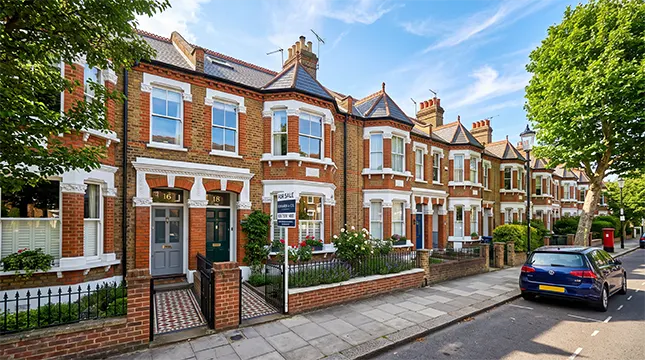
UK house prices and rental trends shaping the autumn 2026 property market
The Housing Market Heading Into Autumn 2026
Timing matters when you are weighing up renting vs buying after moving, so it helps to know where things actually stand. Figures from the Office for National Statistics show the average UK house price sat at roughly £268,000 in early 2026, with annual growth slowing to around 1.3 per cent, well below the pace of wage growth. Rents, meanwhile, have kept climbing, with the average UK monthly rent reaching around £1,380 by spring, though the rate of increase has eased towards its slowest pace since 2022.
Analysts at Rightmove expect asking prices to edge up modestly through the rest of 2026, with buyer affordability improving as wages outpace property price growth and mortgage rates settle below the highs of recent years.
On the rental side, Zoopla reports that rental supply remains well below pre-pandemic levels in every region, which is keeping upward pressure on rents even as demand cools slightly. England’s Renters’ Rights Act, in force since May 2026, has also changed the rules around notice periods and rent increases, so it is worth understanding your rights if renting is on the table.
None of this tells you what to do personally, but it does set the backdrop.
A market where sale prices are broadly flat takes some of the urgency out of buying immediately, while a tight rental market means renting is rarely the cheap stopgap it once was.
Autumn is traditionally when serious movers plan their next step, making it a good moment to weigh up your own numbers.
Why a House Move Is the Perfect Moment to Pause and Reassess
Selling up naturally breaks the routine you have been in, and that makes it an ideal point to question assumptions rather than simply repeat them.
Perhaps you now work entirely from home, or are relocating for work, downsizing now the children have left home, or simply ready for a change of scenery. Whatever prompted the sale, you now have something many homeowners never get, a genuinely blank slate.
Buying again immediately can feel like the default option, especially if you are used to owning, but it is not automatically the right one.
Renting for six months to a year gives you room to explore a new area or wait for the right property to come up.
If you are still weighing up your options around the sale itself, our thinking about selling page covers some of the practical groundwork that applies to a domestic move.

The benefits of renting after selling a house before buying again
The Case for Renting First
Choosing to rent after a sale is not admitting defeat; far from it, it is a deliberate strategy that suits a lot of movers, particularly those who are relocating to an unfamiliar area or who sold faster than expected.
- A short tenancy lets you test a neighbourhood, school catchment, or commute before committing to a mortgage there.
- No chain pressure. You avoid being tied into a linked sale and purchase, so a wobble further down someone else’s chain cannot derail your own move.
- Time to find the right home. Rather than settling for the best option available in a tight window, you can wait for a property that actually ticks your boxes.
- A chance to save. If prices in your target area are expected to soften, renting briefly can mean buying later on better terms.
- You will be in a better position than most buyers. Cash in the bank is a huge advantage for sellers who want a buyer who can move quickly.
The trade-off is that rent payments do not build equity, and with the average UK rent now well over £1,300 a month, a lengthy stay in rented accommodation is rarely free.
Renting works best as a deliberate, time-limited step rather than an open-ended one.
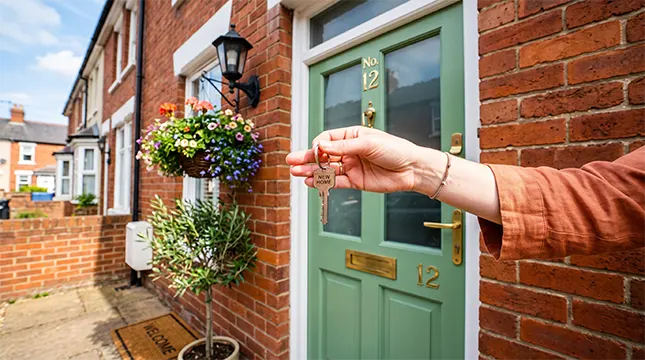
Why buying a new home straight after selling can make financial sense
The Case for Buying Again Straight Away
For many sellers, particularly those who already know the area they want and have their finances in order, buying again without a rental interlude makes far more sense.
- One move instead of two. Skipping a rental tenancy means you avoid packing, unpacking, and paying removal costs twice over.
- Certainty over your monthly costs. A fixed rate mortgage protects you from the kind of rent increases many tenants are currently experiencing.
- You keep momentum. Cash from your sale is ready to use, and mortgage offers are usually time-limited, so moving quickly can make financial sense.
- You start building equity again immediately, rather than paying into a landlord’s mortgage instead of your own.
If you know roughly where you are heading next, it is worth getting your moving checklist in order early, since a well-planned purchase and move can run in parallel rather than adding weeks of delay.

Comparing the costs of renting vs buying, from stamp duty to deposits
The Costs to Weigh Up
The numbers rarely fall neatly on one side, so it is worth totting up the real costs of each route rather than relying on gut feeling.
Buying again brings Stamp Duty Land Tax, mortgage arrangement fees, valuation costs, and legal fees, all on top of your deposit.
Renting brings a deposit of its own, typically five weeks’ rent in England, along with reference and administration charges, and of course the ongoing monthly cost itself.
Independent guidance from MoneyHelper, the government-backed money advice service, is a useful starting point if you want a neutral, non-commercial view on the sums involved, including how mortgage rates and deposit size affect your monthly outgoings compared with renting equivalent property.
Do not forget the cost of moving itself either.
Two moves, one into rented accommodation and a second into your eventual purchase, mean two removal jobs and, potentially, two periods where your belongings need somewhere safe to sit in the meantime.
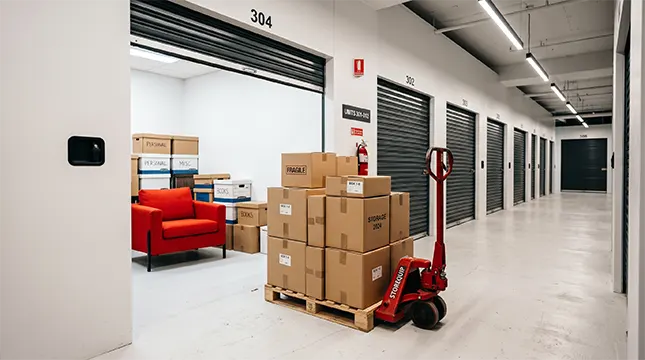
Secure storage solutions for the gap between selling and moving into your next home
Where Does Storage Fit In?
This is the part of the decision that catches a lot of people out.
Whether you rent for a few months or spend longer searching for the right property to buy, there is very often a gap between leaving your old home and settling into the new one.
Rented accommodation rarely has room for the contents of a full-sized house. That is exactly the situation our secure storage service is designed for.
Rather than squeezing everything into a smaller rental or paying to move bulky furniture twice, many of our customers place non-essential items into secure, dedicated storage containers for the interim period.
It keeps rental viewings simpler, protects your belongings properly, and means your eventual move into a permanent home only has to happen once.
For smaller needs, our self-storage facilities offer flexible, accessible units if you would rather manage the space yourself.
With the autumn market traditionally busy for exactly this kind of move, between a sale completing and a rental or purchase lining up, booking storage early is a sensible piece of planning rather than an afterthought.
No matter your location in the UK, all of White & Company’s branch offices have secure storage facilities attached. So, you can move and store your possessions with ease, benefiting from flexible storage options, enhanced security, and the convenience of managing your entire move through one experienced removals and storage company.
Making Your Decision: A Simple Checklist
A few honest questions can cut through a lot of the back and forth. Ask yourself the following.
- How confident am I in the area I am moving to? If you are unsure, renting buys you time to find out.
- Is my mortgage offer or agreement in principle still valid, and would delaying a purchase mean losing favourable terms?
- Can I comfortably afford a deposit and moving costs twice over, should I rent before buying?
- How much of my current home’s contents would fit into a rental property, and would secure storage make the gap easier?
- What does the local market data suggest? Are prices and rents in my target area rising, falling, or holding steady?
There is no perfect formula, but working through these questions honestly usually points fairly clearly towards the option that suits your circumstances best.

Professional house removals and moving support for your next home
Getting Support With Your Next Move
Whichever path you choose, renting first or buying again straight away, the practical side of the move itself does not have to be stressful.
Our house removals team can help with everything from packing to transport, and our planning your move guide is a good next stop if you want a broader overview of the process from start to finish.
If secure storage sounds like it would smooth the gap between homes, find your local branch or get a quote and one of our team will be happy to talk through your options ahead of the busy autumn season.
White & Company are members of the British Association of Removers, so you can rest assured you are in good hands.
Get in touch today and discuss your move requirements with one of our friendly team members. Our home surveys and quotations are free of charge and come with absolutely no obligation.
Renting vs Buying Frequently Asked Questions
How far in advance should I book a removals company?
For a domestic move, four to six weeks’ notice is usually enough, though popular autumn dates can book up faster. If your move involves storage or an international leg, aim to get in touch as early as possible so your preferred dates are secured.
What should I do with my belongings if there is a gap between homes?
A short-term secure storage unit is the simplest solution. It protects your furniture and boxes properly and means you only need to move everything once your new home is ready, rather than juggling temporary space in a rental property.
Do I need to change my address with everyone before moving day?
It helps to start early. Notify your bank, employer, GP, the DVLA and HMRC, and set up mail redirection with Royal Mail a couple of weeks before you move so nothing important goes missing during the transition.
Is it cheaper to move during the week or at weekends?
Weekday moves are often less expensive since demand for removal teams and vehicles tends to be lower than at weekends. If your schedule allows it, a mid-week moving date can also mean more flexibility on timing during the day itself.
What is the best time of year to move house?
Spring and autumn are traditionally the busiest and, in many ways, the most practical seasons to move, with milder weather and a good supply of homes on the market. Summer can suit families working around the school calendar, while winter moves are often quieter and can come with more flexible availability from removal companies.

Max is a seasoned writer and blogger in the real estate and home moving sectors, as well as a knowledgeable source of information for expatriates living and working abroad. His detailed insights have helped thousands of people move and live abroad with greater simplicity and ease.

Posted in: News
Leave a Comment (0) ↓