
Living in Winchester in 2026: 11 Tips for Enjoying Life in Hampshire’s Historic City

Moving home and thinking about living in Winchester?
It is a city where medieval streets, a working cathedral and genuinely excellent schools sit comfortably alongside independent coffee shops, a fast commute to London and a property market that remains one of the most sought after in the Southeast.
Whether you are a professional weighing up the trade-off between commuting distance and quality of life, a family drawn in by the schools, or simply someone ready for a change of pace, Winchester continues to reward the people who choose it.
As the autumn moving season gets underway, now is a good time to take a fresh look at what life in the city actually involves in 2026, from current house prices and rents through to schools, transport, and job opportunities.
And when the time comes to make the move itself, White & Company’s local Winchester branch has been helping people settle into Hampshire since as far back as 1871.
A Short Overview of This Blog
We go through everything you need to know about settling in Winchester in 2026, covering house prices, commuting, schools, and job prospects along the way. Use the summary below to jump straight to the section that matters most to you.
- Winchester Housing Market 2026: current average prices, rents and where to search for a home.
- Transport in Winchester: commute times into London and the road network around the city.
- Things to Do in Winchester: the cathedral, historic sites, and the city’s cultural calendar.
- Green Spaces in Winchester: riverside walks, parks, and access to the South Downs.
- Restaurants, Cafés and Shopping where to eat, drink and browse locally.
- Schools and Education state, independent and sixth form college options.
- Lifestyle and Local Spirit community life, clubs and how residents rate the city.
- Cost of Living what to budget for beyond rent or a mortgage.
- Best Areas to Live: a quick neighbourhood-by-neighbourhood guide.
- Jobs in Winchester: local employment sectors and nearby hubs.
- Quality of Life and Moving Tips pulling it all together, plus practical advice for moving day.
Whichever part of Winchester life you are most curious about, there is a section below with the detail you need. And when you are ready to start planning the move itself, our local team is only a phone call away.
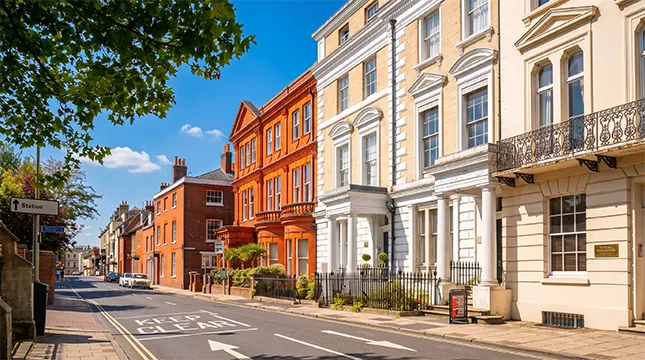
Winchester’s housing market in 2026 — average prices now sit at £462,000
1. Winchester Housing Market 2026: Buying or Renting a Home
Winchester’s property market has cooled slightly from its post-pandemic highs, which is good news for anyone entering the market this year. According to the latest
According to the latest ONS house price data for Winchester, the average property price in the city stood at £462,000 in April 2026, a modest 1.1 percent fall on the previous year. First time buyers paid an average of £345,000, while home movers paid closer to £557,000.
Property type makes a real difference to what you will pay.
Detached homes, concentrated in areas such as St Cross and Teg Down, average £745,000, while terraced houses sit nearer £390,000 and flats or maisonettes offer the most affordable route in at around £229,000.
Renting has become noticeably more expensive over the past year. The average monthly rent across Winchester reached £1,505 in the year to May 2026, up almost 4 percent annually and running ahead of the wider Southeast.
One-bedroom flats near the centre average around £1,014 a month, while a three-bedroom family home typically costs £1,619, rising to over £2,200 for larger detached properties.
It is worth browsing Rightmove and Zoopla early to get a feel for what is currently on the market before you commit to a budget.
Local tip: Autumn is traditionally one of the busiest periods for the Winchester market, as families try to move before the new school term settles in. If you are searching now, register with several local agents at once and be ready to view quickly, as well-presented homes in popular postcodes such as SO22 and SO23 tend to go under offer within days.
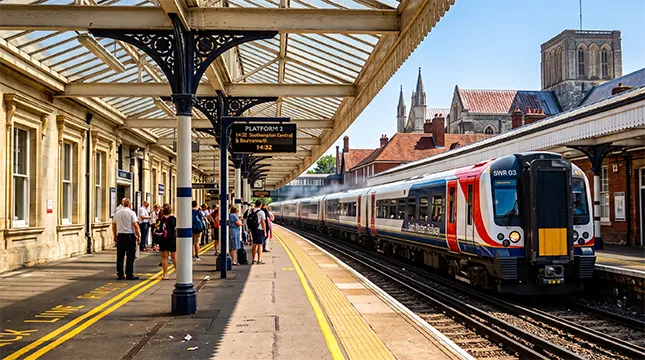
Trains to London Waterloo run every 20–30 minutes, with the fastest journey around 56 minutes.
2. Transport in Winchester: Getting Around and Commuting Options
Winchester’s rail links remain one of its biggest selling points. Southwestern Railway runs frequent direct services to London Waterloo, with the fastest trains covering the journey in around 56 to 58 minutes and departures roughly every 20 to 30 minutes throughout the day. You can check live times and fares through Trainline.
By road, Winchester sits neatly at the junction of the M3, A34, A31, A3090 and A272, with the A303 and A30 both a short drive to the south. This makes the wider Hampshire coast, the New Forest and Southampton Airport all easily reachable, on top of the obvious benefit of fast access to London and the M25.
Within the city itself, Winchester is compact enough to get around comfortably on foot or by bike, and local bus routes connect the surrounding villages and suburbs.
Parking near the Cathedral and High Street is limited and can be costly, so many residents choose to leave the car at home for short trips into the centre.
Local tip: If you will be commuting regularly, a season ticket or railcard can save a substantial amount over the course of a year. It is also worth testing your journey at actual rush hour before you commit to a property, since journey times can vary noticeably between the fastest and slowest services.

Winchester Cathedral remains the city’s centrepiece for culture and history
3. Things to Do in Winchester: Culture, History and Top Attractions
Winchester Cathedral remains the city’s centrepiece, with a programme of concerts, tours and exhibitions running throughout the year, including summer Jazz Lates evenings and a winter Christmas market. Full listings are available on the Winchester Cathedral events page.
History lovers are equally well served elsewhere in the city. The Great Hall houses the legendary Round Table, while Wolvesey Castle and the Hospital of St Cross add further medieval interest just outside the centre.
Worth noting for 2026 is that Hat Fair, Winchester’s long-running outdoor arts festival, is taking a planned year out and is due to return in July 2027.
In the meantime, the city’s cultural calendar stays busy with the Grange Festival, seasonal food festivals, and a full events programme, all listed on Visit Winchester.

The 24-mile Clarendon Way footpath starts in Winchester and is a favourite among local walkers.
4. Green Spaces in Winchester: Parks, Nature, and Outdoor Living
One of Winchester’s understated strengths is how easy it is to step out of the city and into open countryside.
The River Itchen runs directly through the centre, ideal for a riverside walk or a spot of wildlife spotting, while the South Downs National Park sits right on the doorstep, offering miles of chalk downland trails.
Closer to home, Oram’s Arbour and River Park provide easy green space within walking distance of the centre, and the Clarendon Way, a 24-mile footpath that starts in the city, is a favourite for local walkers and runners.
Winchester City Council maintains a full list of open spaces across the district if you want to explore further afield.
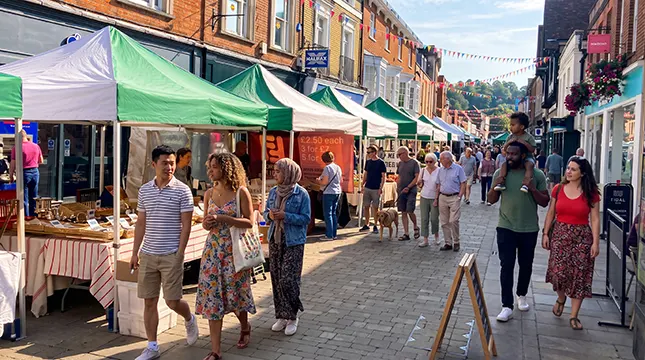
Housed in a building dating back roughly 600 years, The Chesil Rectory is one of Hampshire’s most atmospheric places to eat
5. Best Restaurants, Cafés, and Shopping in Winchester
Winchester punches well above its weight for a city of its size when it comes to food.
Independent cafés and bakeries line the streets around the Cathedral, while The Chesil Rectory, housed in a building dating back roughly 600 years, remains one of the county’s most atmospheric places to eat.
The High Street mixes familiar names with independent boutiques, and the monthly Winchester Farmers’ Market, one of the largest of its kind in the UK, is well worth timing a Saturday visit around if fresh, locally sourced produce is your thing.

Winchester is home to Outstanding-rated schools and Peter Symonds College.
6. Schools and Education in Winchester
Education remains one of Winchester’s biggest draws for families.
The Westgate School, an all-through school covering ages 4 to 16, holds an Outstanding rating from Ofsted, and full details of its most recent inspection are available via Ofsted’s own reporting portal. Kings’ School Winchester, a large nonselective secondary, is currently rated Good.
Take a look at SchoolGuide.co.uk for some of the best schools in the area.
For post 16 study, most local secondary pupils progress to the Ofsted-rated outstanding Peter Symonds College, one of the largest and best-regarded sixth form colleges in the country.
And for parents considering independent education, Winchester College, founded in 1382, remains one of the most prestigious schools in the world, attracting pupils from across the globe.
Local tip: Catchment areas for the most popular Winchester schools are tightly drawn and oversubscription is common, so if schooling is a priority for your move, it is worth applying as early as Hampshire County Council’s admissions timetable allows.
7. Lifestyle and Local Spirit in Winchester
Community life in Winchester extends well beyond the school gates. Theatre groups, choirs, and art societies offer plenty of ways to get involved, while football, rugby, cricket, and tennis clubs cater to sports enthusiasts of every level.
River Park Leisure Centre and the surrounding open spaces make it easy to stay active without leaving the city.
Winchester City Council’s most recent full resident survey found that 87 per cent of residents rated the local area a good place to live, with access to parks and green space cited as one of the biggest draws.
A newer wave of research feeding into the council’s 2025 to 2030 plan is now underway, and details of both surveys are published on the council’s residents’ survey page.

Budgeting for life in Winchester — housing, energy and everyday costs in 2026
8. Cost of Living in Winchester 2026: Budgeting for Daily Life
There is no getting around it, Winchester comes at a premium compared with much of Hampshire.
Property and rental costs sit well above the county average, and because the city has a larger proportion of older housing stock, energy bills can run higher than in newer developments, so it is worth factoring this into any budget.
Day-to-day costs such as groceries, entertainment and transport are broadly in line with the wider Southeast, making Winchester more affordable than London but pricier than many surrounding rural towns.
The Numbeo cost of living comparison for Winchester is a useful starting point if you are relocating from elsewhere and want a like-for-like comparison.
Free and low-cost attractions go a long way towards balancing the budget. Riverside walks, public parks, and the city’s calendar of community festivals all cost nothing to enjoy, and many residents find that Winchester rewards those who embrace both its cultural richness and its simpler pleasures.
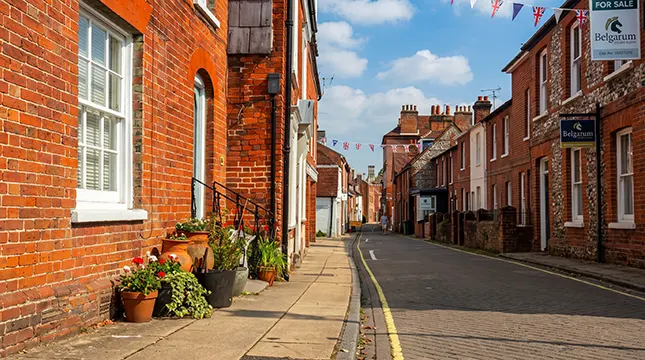
Hyde offers period cottages and a genuinely villagey atmosphere close to the city centre
9. Best Areas to Live in Winchester: Neighbourhood Guide
Where you choose to settle within Winchester will shape your day-to-day experience of the city as much as anything else. A few areas consistently stand out.
- St Cross: historic charm, riverside walks, and some of the city’s premium homes.
- Weeke and Harestock: a family-friendly stretch with good local schools and everyday amenities.
- Kings Worthy a village feel just outside the city, with a strong sense of community.
- Fulflood popular with commuters thanks to its proximity to the railway station.
- Hyde close to the centre, with period cottages and a genuinely villagey atmosphere.
- Abbots Barton: quieter residential streets to the north, with easy access to the M3.
- Badger Farm and Oliver’s Battery suburban living with modern housing and good school access.
Each neighbourhood has its own character, and as with any city, that character can shift noticeably from one street to the next, so it is always worth exploring on foot before you commit.

Good co-working spaces and reliable broadband make Winchester popular with remote professionals
10. Jobs in Winchester: Work, Careers and Opportunities
Winchester’s local economy continues to be anchored by education, public services, healthcare, heritage, and retail, all of which provide a steady base of employment within the city itself.
Its proximity to Southampton and Basingstoke also opens up a much wider range of opportunities in technology, logistics and finance for those willing to commute a short distance.
Remote and hybrid working is well supported here too, with a good choice of co-working spaces and reliable broadband making Winchester an increasingly popular choice for digital professionals who no longer need to be London based five days a week.
Tourism and hospitality remain central to the local economy given the volume of visitors the Cathedral and heritage sites attract year-round.
For job seekers, Totaljobs and Indeed are both useful starting points for browsing current local vacancies.
11. An Unbeatable Quality of Life
Taken together, Winchester’s history, culture, green space, schools, and transport links add up to a genuinely rare combination.
It is a city that manages to feel both deeply rooted in its past and thoroughly geared up for modern life, whether you are working locally, commuting into London, or raising a family.
Moving to Winchester: Practical Tips and Essential Advice
Finally, a word on the move itself. Winchester’s narrow medieval streets and limited parking near the centre can pose a genuine challenge for larger vehicles, so it pays to book a removals company that already knows the city’s quirks.
White & Company has been moving people in and out of Hampshire for well over 150 years, and our local Winchester branch combines that experience with fully trained porters, a modern fleet, and a genuine understanding of the local area, making for a smooth and stress-free transition into your new home.
If you are still working out your budget for the move, our updated guide to house removals costs in the UK breaks down what you can realistically expect to pay in 2026, from removals through to the wider costs of buying and selling.
A few practical details are also worth sorting out early. Register with local GPs and dentists as soon as you can, since waiting lists in the area can run long.
If you are moving into a conservation area, check planning restrictions before making any changes to the property, and if you have school-aged children, submit your applications via Hampshire County Council as early as possible to give yourself the best chance of your preferred choice.
For added peace of mind, White & Company is a long-standing member of the British Association of Removers, which means we adhere to strict rules and regulations designed to protect customers and maintain the highest standards in the removals industry.
For a free, no-obligation quotation and home survey, call our Winchester team today on 01962 853152.
Frequently Asked Questions about Living in Winchester
How early should I start planning my move?
Most people begin organising their move around 6–8 weeks before moving day, especially if they need a removal company, storage, or packing services.
Do removal companies dismantle furniture?
Yes, many professional movers can dismantle and reassemble larger furniture items if arranged before moving day.
Can I leave clothes inside drawers during a move?
Light clothing is often fine, but heavy items should usually be removed to make furniture safer and easier to carry.
What should I pack separately for moving day?
Keep essentials such as medication, chargers, documents, toiletries, kettle, snacks, and a change of clothes with you.
Can removal companies move plants?
Most companies will move houseplants locally, but long-distance or international moves may have restrictions.
What happens if my completion date changes?
Many removal companies can adjust your booking or offer short-term storage if delays happen within the property chain.
Are packing services worth paying for?
Professional packing reduces stress, saves time, and gives fragile items better protection during transport.

Max is a seasoned writer and blogger in the real estate and home moving sectors, as well as a knowledgeable source of information for expatriates living and working abroad. His detailed insights have helped thousands of people move and live abroad with greater simplicity and ease.

Posted in: News
Leave a Comment (0) ↓