
Moving to Ireland from the UK: Visas, Costs & What to Expect in 2027

Rather than Spain, Portugal or Greece, have you ever considered moving to Ireland from the UK?
Ireland has quietly become one of the most searched relocation destinations for people leaving the UK, and once you look at the details, it is easy to see why.
A shared language, deep cultural ties, and a genuinely unusual legal relationship between the two countries mean a move that would normally involve visa applications, sponsorship, and months of waiting can, for most British citizens, be remarkably straightforward.
In our comprehensive guide, we set out what you actually need to arrange, what a move is likely to cost in 2027, and what life on the other side of the Irish Sea tends to look like once the boxes are unpacked.
A Short Overview of This Blog
If you are weighing up a move to Ireland from the UK, here is the shape of what follows before you dive into the detail below. Each bullet points to a fuller section further down the page.
- Visas and the Common Travel Area: British citizens do not need a visa or work permit to live in Ireland, thanks to a rule that predates the EU.
- Paperwork to sort early: a PPS number, GP registration and driving licence rules to organise once you arrive.
- Cost of living: rent, groceries and everyday costs, and how they compare with typical UK figures.
- Housing: what renting and buying look like in Dublin and beyond in 2027.
- Healthcare and tax: how the Irish system differs from the NHS and PAYE.
- Choosing a location: Dublin against Cork, Galway, Limerick and the quieter counties.
- Shipping your belongings: why a Common Travel Area move is logistically closer to a UK relocation than an overseas one.
Once broken down, none of this is complicated, and thousands of British citizens make this move every year. Read on for the full picture, section by section.
Do You Need a Visa to Move to Ireland?
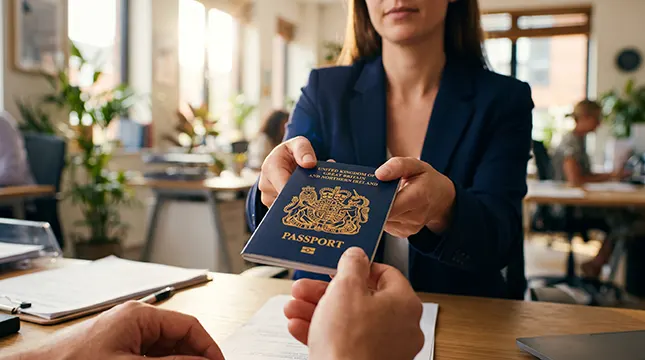
British citizens can live, work and study in Ireland without a visa or employment permit under the Common Travel Area between the UK and Ireland.
In short, no. Ireland and the UK have operated the Common Travel Area, usually shortened to the CTA, since the 1920s, and both governments formally reaffirmed it in a 2019 Memorandum of Understanding to ensure Brexit did not disrupt it.
Under the CTA, British citizens can live, work, study, vote in certain elections and access healthcare and social welfare in Ireland without applying for a visa, residence permit or employment permit.
Irish citizens have the same rights in the UK. Full guidance is available from the UK government’s official CTA guidance and from Citizens Information in Ireland.
It is worth noting that these rights are personal to British and Irish citizens. If you are moving as a family and a partner or dependant has a different nationality, they may still need to apply for residence permission separately, so check their position well before you set your moving date.
The Paperwork You Will Still Need
A visa isn’t the sticking point, but you’ll still have a short list of admin to get through in your first few weeks.
The most important is a Personal Public Service number (PPS number), which you need for almost everything, from opening a bank account to registering with a GP or starting a new job.
Unlike a National Insurance number, you cannot apply for a PPS number until you’re resident in Ireland, so it is one of the first things to tackle on arrival rather than something to arrange in advance.
Full details of the documents required, and where to apply, are set out on the gov.ie PPS number service page.
You will also want to look into exchanging or continuing to use your UK driving licence, registering with a local GP practice, and setting up an Irish bank account, since some employers and landlords will expect one fairly quickly.
What Will It Cost You? Cost of Living in 2027

The cost of living in Ireland varies significantly by location, with Dublin generally more expensive for rent and everyday living than many other Irish cities and counties.
If you are planning a move to Ireland, it is not a cheap alternative to the UK, and Dublin in particular has a well-earned reputation for high rents.
Heading into 2027, a one-bedroom apartment in Dublin typically costs between 1,700 and 1,900 euros a month, with two-bedroom properties often closer to 2,300 euros.
As in all large cities, move outside the capital and prices ease considerably, with the national average rent well below the Dublin figure.
Everyday costs such as groceries, transport and eating out tend to run slightly higher than comparable UK cities, though salaries, particularly in tech, pharmaceuticals and financial services, are often higher too.
The sensible approach is to budget generously for your first few months, since deposits, agency fees and the deposit needed for utility connections all land at once.
Renting or Buying a Home in Ireland

People relocating from the UK to Ireland should compare rental availability, property prices and local housing rules before choosing where to live.
The rental market, especially in Dublin, is tight, with low vacancy rates and strong competition for well-presented properties.
Being ready with references, proof of income and a deposit in hand makes a genuine difference. Rent Pressure Zone rules limit how much rents can rise on existing tenancies in designated areas, though new tenancies are not always bound by the same caps, so it pays to check the specific rules for any property you view.
Buying is a longer game. Dublin apartment prices commonly sit between three hundred and fifty thousand and six hundred thousand euros depending on location and condition, while towns and counties further from the capital, such as Donegal, Leitrim or parts of the midlands, can be a fraction of that.
If your work allows flexibility such as working from home, it is worth widening your search beyond Dublin before settling on a budget.
Property portals such as Daft.ie are the standard starting point for both renting and buying and give a realistic feel for prices in the specific area you are considering.
Healthcare, Tax and Everyday Admin

British citizens moving to Ireland should familiarise themselves with the HSE healthcare system, Irish income tax, PRSI and other everyday administration after relocating.
Ireland’s public healthcare system, run by the Health Service Executive (HSE), differs from the NHS in one important way: most adults do not pay for it at the point of use.
GP visits typically carry a charge unless you hold a medical card or a GP visit card, and many residents take out private health insurance to get faster access to consultants and hospital care. It is worth researching cover options before you move rather than after your first appointment.
On tax, employees pay income tax and PRSI, the Irish equivalent of National Insurance, through a system broadly similar to PAYE.
The Revenue Commissioners website and the HSE website are both useful starting points once you are settled and registering for work or healthcare.
Choosing Where to Live

Dublin, Cork, Galway, Limerick and Ireland’s more rural counties offer very different combinations of employment opportunities, housing costs, commuting and lifestyle for people moving from the UK.
Dublin has the deepest job market, particularly in technology, pharmaceuticals and finance, but also the highest cost of living by some distance.
Cork, Galway and Limerick offer a noticeably gentler pace and lower rents while still having strong local economies, good schools and their own international airports. Further afield, counties such as Donegal, Mayo and Leitrim offer genuinely affordable property and a slower lifestyle, which increasingly appeals to people who can work remotely for a UK employer while living in Ireland.
Whichever area you are drawn to, spend some time there before committing, ideally across more than one season, since a town’s character can shift quite a bit between a bright summer weekend and a wet January.
Shipping Your Belongings: Simpler Than a Typical Overseas Move

Professional UK to Ireland removals can include household packing, transport, customs and transfer-of-residence paperwork, vehicle shipping and storage where required.
Because of the Common Travel Area, moving your household to Ireland is logistically closer to a UK long-distance move than a true international relocation.
You don’t need to complete a customs declaration or budget for import duty on your own used possessions, which removes a significant layer of complexity compared with, say, a move to Europe, Australia or the United States.
That said, your belongings are still crossing the Irish Sea, so professional packing, a detailed inventory and appropriate insurance cover matter just as much as they would for any long-distance move.
White & Company’s House Removals and Long Distance Removals teams handle moves like this regularly, and our Packing Solutions service removes the physical strain of preparing a full household for transit.
If you are taking a car, our Vehicle Shipping service can arrange this alongside your household move, and if your new home isn’t quite ready on the day you leave the UK, our Storage Solutions and Self Storage options give you a secure place to store everything in the meantime.
What to Expect in 2027
Demand for Irish rental and sale property looks set to remain high through 2027, driven by a strong jobs market and continued supply shortages in the main cities.
Rental legislation has been evolving, so check the latest Rent Pressure Zone rules close to your move rather than relying on older guidance.
The Common Travel Area itself has weathered Brexit and every political shift since without change, and there is no indication that the rights it provides to British citizens are at risk.
The practical takeaway is to plan early. Book your removals company, start your property search and gather the documents you will need for a PPS number well before your intended moving date, particularly if you are hoping to move during the busier spring and summer months.
For a checklist that covers every stage of the process, our Moving Checklist and Planning Your Move pages are a good place to start.
Ready to Start Planning?

Moving to Ireland is one of the more straightforward relocations a British citizen can make, and with the right preparation around paperwork, budgeting, and housing, you can plan most of the stress away long before moving day arrives.
White & Company has helped people move within the UK, to Ireland, and worldwide since 1871. To talk through your move, get a quick quote or contact your nearest branch for a free, no-obligation survey.
Frequently Asked Questions About Moving to Ireland from the UK
Do British citizens need a visa to move to Ireland from the UK?
No. British citizens do not need a visa, residence permit or employment permit to move to Ireland. Under the Common Travel Area arrangements between the UK and Ireland, British citizens can live, work and study in Ireland without applying for immigration permission. These rights continued after Brexit and also include access to certain healthcare, social welfare and voting rights. Family members who are not British or Irish citizens may face different immigration requirements, so check their position separately.
Can I move to Ireland permanently from the UK?
Yes. British citizens can move permanently from the UK to Ireland under the Common Travel Area. A British citizen does not need a visa or residence permit simply because they intend to live in Ireland long term. You will still need to organise the practical aspects of becoming resident, including accommodation, employment or income, tax arrangements and access to relevant Irish public services.
Can a British citizen work in Ireland after moving from the UK?
Yes. British citizens can work in Ireland, including as self-employed people, without needing an employment permit. If you are taking up employment in Ireland, you will normally need a Personal Public Service, or PPS, number so that you can register correctly with the Irish Revenue Commissioners and access relevant public services.
What is a PPS number and will I need one when moving to Ireland?
A Personal Public Service number, usually called a PPS number or PPSN, is a unique reference number used when accessing many Irish public services. People moving to Ireland may need one to start employment, register with Revenue, access social welfare services, apply for a driving licence, and access certain healthcare services. Applications require evidence of identity, your address and a reason for needing the number.
Do I need to pay customs duty when moving my belongings from the UK to Ireland?
If you are transferring your normal residence from Great Britain to Ireland, you may qualify for Transfer of Residence relief from Customs Duty and VAT on eligible personal possessions and household effects. Conditions apply, including rules covering how long you have owned and used the goods and how long you have lived outside the EU. Moving from Great Britain to Ireland still involves customs procedures, so organise the correct documentation before your belongings travel.
What paperwork do you need to move household belongings from the UK to Ireland?
People transferring their residence from Great Britain to Ireland may need to submit a Transfer of Residence declaration and supporting documents to Irish Revenue. If household goods travel via a freight ferry channel, you also need a valid Pre-Boarding Notification ID before checking in with the ferry company. Supporting evidence can include documents showing your previous residence, your move to Ireland, and ownership of, or use of, the belongings you’re importing. A professional UK-to-Ireland removals company can help you understand what information you need for the move.
How much does it cost to move from the UK to Ireland?
The cost of moving from the UK to Ireland varies depending on where you are moving from and to, the volume of belongings being transported, property access, and whether you need additional services such as professional packing, storage, or vehicle transport. A smaller move from western Britain to Ireland may have very different requirements from moving a large family home from another part of the UK. The most accurate way to establish the cost is to arrange a removals survey and receive a quotation based on the details of your individual move.
How long does it take to move belongings from the UK to Ireland?
The timescale for UK to Ireland removals depends on the collection and delivery locations, the size of your move, ferry schedules, and the type of removal service you arrange. Where applicable, prepare Customs and Transfer of Residence paperwork in advance. When planning your move, discuss your preferred dates with your removals company as early as possible so they can coordinate transport, paperwork, and delivery around when you expect to take possession of your new home.
Can White & Company move my belongings from the UK to Ireland?
Yes. White & Company provides long-distance and international moving services and can assist customers relocating their household belongings from the UK to Ireland. Depending on your requirements, your move can also include professional packing, vehicle shipping and storage if your new property is not ready when you leave the UK. White & Company has helped people move since 1871 and can arrange a survey to establish your individual relocation requirements.
Can I take my car when moving from the UK to Ireland?
Yes, you can bring a car with you when relocating from the UK to Ireland, but importing and registering a vehicle involves additional requirements. People permanently transferring their residence may qualify for Transfer of Residence relief from Vehicle Registration Tax if they meet the relevant conditions, although the vehicle still needs to be registered in Ireland. It is sensible to check the current Irish Revenue requirements before your move and factor vehicle arrangements into your relocation planning.
Can I use my UK driving licence after moving to Ireland?
Ireland allows you to exchange certain foreign driving licences for an Irish licence, including licences from recognised states. The National Driver Licence Service sets out the requirements for exchanging a foreign licence, including providing the original licence and, in some circumstances, supporting documentation. Because driving licence rules can depend on how and where a licence was originally issued, anyone moving permanently from the UK should check the latest NDLS requirements for their particular licence.
Where are the best places to live in Ireland when moving from the UK?
The best place to live in Ireland depends on your budget, employment, lifestyle and whether you need to commute. Dublin has Ireland’s largest employment market and extensive transport connections, while Cork, Galway and Limerick are popular alternatives for people looking for city living outside the capital. Smaller towns and rural counties can offer a very different pace of life and may appeal particularly to people who can work remotely. It is worth spending time in several areas and researching housing availability before committing to a location.
Is it cheaper to live in Ireland than in the UK?
There is no simple answer because living costs vary considerably across both countries. Housing is likely to be one of the biggest considerations, particularly if you intend to live in or around Dublin, while costs in other Irish cities, towns and rural areas can be very different. Anyone moving to Ireland from the UK should compare rent or property prices, utilities, transport, groceries, healthcare and expected income for the specific Irish location they are considering rather than relying on a national average.
How does healthcare work when moving from the UK to Ireland?
Ireland’s healthcare system is different from the NHS. The Health Service Executive provides public healthcare, but not every service is free at the point of use, and some people pay for GP appointments and other services. British citizens have healthcare rights under the Common Travel Area, but eligibility and charges can depend on individual circumstances. Therefore, it’s worth researching your healthcare arrangements before relocating and registering for the services you need once you have moved.
Can I use storage when moving from the UK to Ireland?
Yes. Storage can be particularly useful when moving from the UK to Ireland if your sale, tenancy, or completion dates don’t line up. You can place your belongings in secure storage while you arrange accommodation or wait for your new Irish property to become available, then have them delivered when you are ready. White & Company offers storage solutions that can be incorporated into the wider removal, so you don’t have to coordinate storage and transportation separately.
Should I use a professional removal company when moving to Ireland from the UK?
An experienced removals company can simplify a UK-to-Ireland relocation because your belongings are travelling internationally and, when moving from Great Britain, you may need to complete customs and Transfer of Residence procedures. A professional removals company can also assess the volume being moved, arrange suitable transportation, provide packing services and coordinate collection and delivery around your moving dates. When comparing companies, check their experience with UK-to-Ireland removals and what is included in the quote.
How far in advance should I arrange removals from the UK to Ireland?
Start planning your move as early as possible, especially if you plan to relocate during popular moving periods such as spring, summer, or around school holidays. Early planning gives you more time to arrange a survey, organise accommodation, prepare the required customs or Transfer of Residence documentation and decide whether you need packing, storage or vehicle transportation. You don’t need every detail of your move finalised before contacting a removals company for initial advice.

Max is a seasoned writer and blogger in the real estate and home moving sectors, as well as a knowledgeable source of information for expatriates living and working abroad. His detailed insights have helped thousands of people move and live abroad with greater simplicity and ease.

Posted in: News
Leave a Comment (0) ↓