
Moving to the Netherlands from the UK: Visas, Costs & What to Expect in 2027

Moving to the Netherlands from the UK?
If you are thinking about trading your daily commute for a canalside cycle to the office, you are not alone.
The Netherlands has quietly become one of the most popular destinations for British professionals.
If you have the right skills and qualifications, particularly in tech and finance, Amsterdam, Eindhoven, Rotterdam, and Utrecht are home to global employers, a thriving startup scene and a working culture that takes the weekend very seriously indeed.
Yet moving to the Netherlands from the UK shores is a very different process today than it was a decade ago.
Since Brexit, British citizens are treated as non-EU nationals, which means residence permits, salary thresholds and a fair amount of Dutch paperwork are now part of the journey.
In this guide, we look at the visa routes that genuinely work for UK movers in 2027, what everyday life really costs, the important tax change arriving on 1 January 2027, and the order in which to tackle your first few weeks of admin so nothing slips through the net.
So, dust off your bike and let’s get started.
Your Dutch Move at a Glance
Relocating to the Netherlands is very achievable for UK professionals, but the paperwork, costs, and timing are much easier to manage when you know what to expect. Here is a quick overview of what this guide covers.
- Why UK Professionals Keep Choosing the Netherlands: the tech, finance and engineering hubs in Amsterdam, Eindhoven, Rotterdam, and The Hague, plus the work-life balance that draws Brits over.
- Do You Need a Visa to Move to the Netherlands from the UK? Yes, for most people, since Brexit, you need a residence permit for any stay beyond 90 days, unless you are covered by the Withdrawal Agreement.
- The Highly Skilled Migrant Route Explained: the most popular route for professionals, with 2026 salary thresholds from €4,357 to €5,942 a month and a recognised sponsor employer.
- Other Ways to Move to the Netherlands: the EU Blue Card, intra-corporate transfers, self-employed and startup permits, and family routes.
- The 30% Ruling Becomes the 27% Ruling in 2027: the expat tax break drops to 27% from 1 January 2027, with higher salary requirements to qualify.
- What Does It Cost to Move to the Netherlands? Rent from around €21 per square metre, health insurance of about €169 a month in 2027, plus everyday, property, and removal costs.
- Finding Somewhere to Live: how to compete in a tight rental market and why commuter cities often offer better value.
- Your First Few Weeks: Getting the Paperwork in the Right Order, registering with the gemeente, getting your BSN, setting up a bank account, health insurance, DigiD, and exchanging your driving licence.
- What to Expect from Everyday Dutch Life: direct communication, cycling culture, booked-up diaries, familiar weather, and the value of learning Dutch.
- Getting Your Belongings, Car and Pets to the Netherlands: transit times, customs, export packing, import tax on cars and pet travel rules.
- How White & Company Can Help You Move to the Netherlands, our weekly removals service, storage options, and corporate relocation support.
- Frequently Asked Questions About Moving Home: seven quick answers to common moving questions, from video surveys to delayed completions.
None of these steps is especially difficult on its own, but they do need to happen in the right order. Read on for the full details behind each one.
Why UK Professionals Keep Choosing the Netherlands
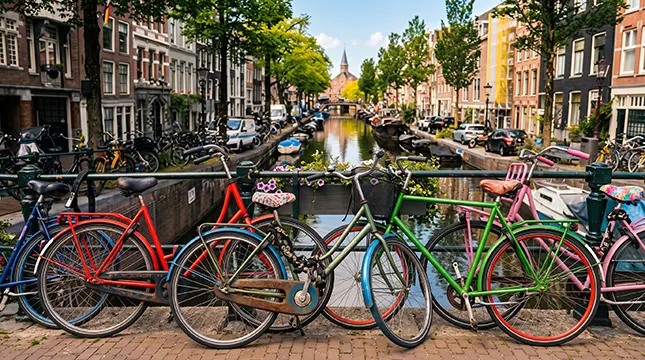
Explore the incredible career opportunities drawing expats to Amsterdam’s Zuidas district and Eindhoven’s Brainport region.
The appeal is easy to see.
The Netherlands is just a short flight, ferry crossing or Eurostar ride from the UK; English is spoken almost everywhere you go, and the country regularly ranks among the best in the world for work-life balance.
For professionals, the job market is the real draw. Amsterdam’s Zuidas business district is home to banks, fintechs, and international headquarters.
Eindhoven’s Brainport region is a global centre for high-tech engineering and semiconductors.
Rotterdam has Europe’s largest port and a busy logistics and energy sector, while The Hague is a hub for international organisations, legal work, and cybersecurity.
Add excellent public transport, a famously flat landscape made for cycling, and a working culture where leaving the office at five o’clock is considered perfectly normal, and it is easy to see why so many Brits decide to give it a go.
Do You Need a Visa to Move to the Netherlands from the UK?
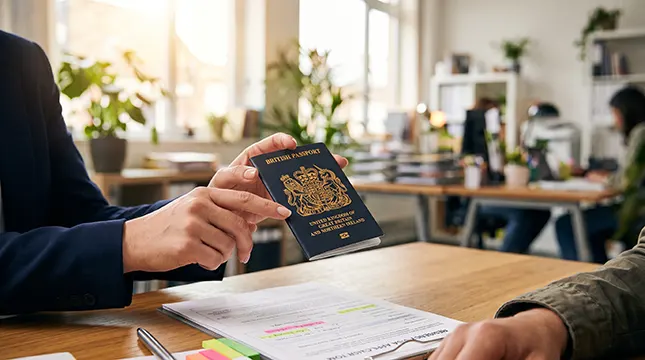
Understand exactly how UK citizens must now secure formal residence permits for any stay extending beyond 90 days.
In most cases, yes. Since the Brexit transition period ended on 31 December 2020, British citizens are classed as third country nationals in the Netherlands, so the freedom of movement that once made relocating as simple as booking a removal van no longer applies.
You can still visit without a visa for up to 90 days in any 180-day period across the whole Schengen area, but you cannot work during that time, and anything longer needs a residence permit.
UK travellers now also have their fingerprints and photograph recorded at Schengen borders under the EU’s Entry/Exit System, so border staff can easily spot overstays.
For most working moves, your Dutch employer does the heavy lifting. As a recognised sponsor, it applies to the Immigration and Naturalisation Service, known as the IND, on your behalf.
Helpfully, British passport holders do not need the separate entry visa (the MVV) that many other nationalities require, so the process focuses on the residence permit itself.
If you were already living in the Netherlands before 1 January 2021, you are covered by the Withdrawal Agreement and keep broadly the same rights as before, provided you hold the Article 50 TEU residence document.
Everyone else needs to choose one of the routes below. The IND residency overview lists every permit type, and the GOV.UK Living in the Netherlands guide is a helpful starting point for British nationals.
The Highly Skilled Migrant Route Explained

The preferred pathway for professionals. Learn the precise 2026/27 salary thresholds required to qualify for the popular kennismigrant scheme.
For most UK professionals in tech, finance and engineering, the highly skilled migrant permit, known locally as the kennismigrant scheme, is the route of choice.
It is relatively quick; there is no labour market test, and your partner and children can usually join you, with your partner free to work.
The key requirement is salary. For 2026, the IND income requirements set a gross monthly salary of at least €5,942 if you are 30 or over, €4,357 if you are under 30, and €3,122 for recent graduates under the reduced salary criterion, all excluding the 8% holiday allowance.
These amounts are indexed every year on 1 January, so expect slightly higher figures for 2027 and always check the latest numbers before signing a contract.
Your employer must also be an IND-recognised sponsor. Most large international firms already are, but if you are joining a smaller startup or scale-up, it is worth asking the question early in the recruitment process.
Application fees are set by the IND and rise each year, so check the current IND fees page when budgeting. In many professional roles, employers cover this cost as part of the relocation package.
Other Ways to Move to the Netherlands
The highly skilled migrant permit is not the only option, and depending on your circumstances, one of these routes may suit you better.
EU Blue Card. This works in a similar way to the highly skilled migrant permit but requires a degree-level qualification and a contract of at least six months. Its big advantage is mobility, as holding a Blue Card can make it easier to move to another EU country later. The 2026 salary requirement matches the highly skilled migrant figure for over 30s at €5,942 a month, with a reduced level of €4,754 for recent graduates.
Intra corporate transfer. If your current UK employer has a Dutch office, it may be able to transfer you there for a set period, which is a popular choice in finance and consultancy. Our Employee Relocation team regularly works with businesses moving staff overseas.
Self-employment and startups. Freelancers and business owners can apply for a self-employed permit, which assesses how your business will benefit the Dutch economy. Founders of innovative businesses can also apply for a one-year startup permit with the backing of an approved facilitator.
Family and partner routes. If your partner is a Dutch or EU citizen or already lives in the Netherlands with a residence permit, you may be able to apply to join them.
The 30% Ruling Becomes the 27% Ruling in 2027
If you are moving for work, this is the change worth knowing about.
The Netherlands has long offered skilled workers recruited from abroad a generous tax break, allowing employers to pay up to 30% of salary tax-free to cover the extra costs of relocating.
From 1 January 2027, that maximum drops to 27%, as confirmed by the Netherlands Enterprise Agency. If your ruling started before 2024, you keep the full 30% for the rest of its term. Anyone whose ruling began in 2024 or later moves to the 27% rate in January 2027, and new arrivals will be on 27% from day one.
The minimum salary needed to qualify also rises in 2027, with a lower threshold for under-30s holding a master’s degree.
At a salary of €80,000, the 3% reduction means you can pay around €2,400 less in tax each year. The ruling still lasts up to five years and remains a valuable perk, so it’s worth raising with your employer during salary negotiations.
As with any tax matter, speak to a Dutch tax adviser before you move, and read the GOV.UK guidance on tax if you leave the UK to live abroad so you can tell HMRC about your move correctly.
What Does It Cost to Move to the Netherlands?

Compare average rental costs in Amsterdam against excellent value commuter cities and mandatory health insurance premiums.
The honest answer is that the Netherlands isn’t cheap, but salaries for skilled roles tend to reflect that, and many everyday costs compare well with London and the Southeast.
Rent
Housing is by far the biggest expense. According to Pararius, new tenants in the free sector paid an average of around €21 per square metre per month in early 2026, rising to more than €28 in Amsterdam. That means an 80-square-metre apartment in the capital typically costs €2,300 to €2,500 a month, while Rotterdam, Utrecht, and The Hague offer noticeably more space for your money. Landlords can ask for a deposit of up to two months’ basic rent.
Health insurance
Basic Dutch health insurance is compulsory for residents and must be arranged within four months of registering. Under the Dutch government’s budget plans announced in September 2026, the average premium is expected to rise to around €169 a month in 2027, and the compulsory annual excess, known as the eigen risico, will increase from €385 to €400. Employers often contribute, and lower earners may qualify for a healthcare allowance. GOV.UK explains healthcare for UK nationals in the Netherlands in more detail.
Everyday costs
Groceries, eating out and utilities are broadly similar to the UK; public transport is excellent, and many people happily swap the cost of a second car for a good bike. Childcare can be expensive, although working parents often receive childcare benefits, which the government plans to increase in 2027.
Buying a home
Dutch transfer tax is charged on property purchases, and the government has proposed cutting the rate for homes that will not be your main residence from 8% to 7% in 2027. First-time buyers under 35 may be exempt altogether, subject to a property price cap. Our guide to buying property abroad as a UK citizen covers the bigger picture.
The move itself
Finally, budget for the removal. Because the Netherlands is so close, most moves are by road and ferry, with part-load and full-load options to suit different budgets. A free video survey is the quickest way to get an accurate figure without anyone needing to visit your home. Alternatively, you can arrange for one of our surveyors to visit your home and carry out a survey in person.
Finding Somewhere to Live
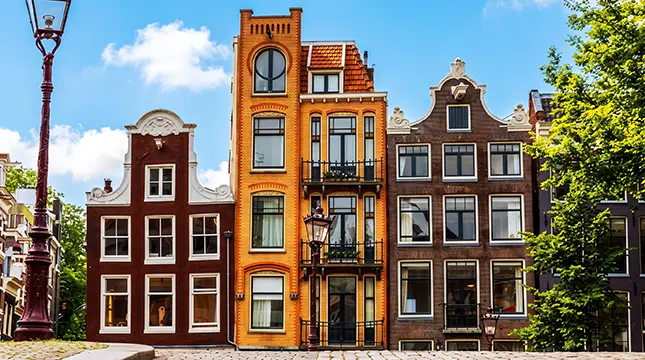
Move quickly by having your employment contract and payslips prepared before viewing properties in the Randstad.
The Dutch rental market is competitive, particularly in the Randstad, the ring of cities that includes Amsterdam, Rotterdam, The Hague, and Utrecht. Good properties can be snapped up within days, so it pays to be organised.
Have your employment contract, passport, and recent payslips ready to send the moment you find somewhere you like and be wary of anyone asking for money before you have viewed a property and signed a contract.
Many newcomers start with a furnished short let while they get to know an area, then look for something more permanent once they have settled.
It is also worth looking beyond the obvious. Commuter cities with strong rail links, such as Almere, Leiden, Haarlem, Amersfoort, and Arnhem, often have better availability and lower rents, and with Dutch trains as efficient as they are, a 30-minute ride into work is perfectly normal.
If you need time to find the right place, our Storage Solutions can keep your furniture safe in the UK until you are ready.
Your First Few Weeks: Getting the Paperwork in the Right Order
The Dutch love a good system, and once you are in it, everything runs smoothly. The trick is to tackle the admin in the right order because most steps depend on the one before.
- Register with your municipality, known as the gemeente, within five days of arriving if you plan to stay longer than four months. This adds you to the Personal Records Database.
- Receive your BSN, the citizen service number you need for work, banking, healthcare and almost everything else.
- Collect your residence permit from the IND if you didn’t receive it before you travelled.
- Open a Dutch bank account, since many landlords, employers and utility companies expect a Dutch IBAN.
- Take out Dutch health insurance within four months of registering. Cover is backdated to your registration date, and so are the premiums.
- Apply for DigiD, the digital login used for tax, healthcare, and government services.
- Exchange your UK driving licence. You can drive on a UK licence for up to 185 days after registering, and you can swap it for a Dutch licence through the RDW without a test.
For everything you need to sort before you leave the UK, our Moving Checklist and Planning Your Move guide are great places to start.
What to Expect from Everyday Dutch Life
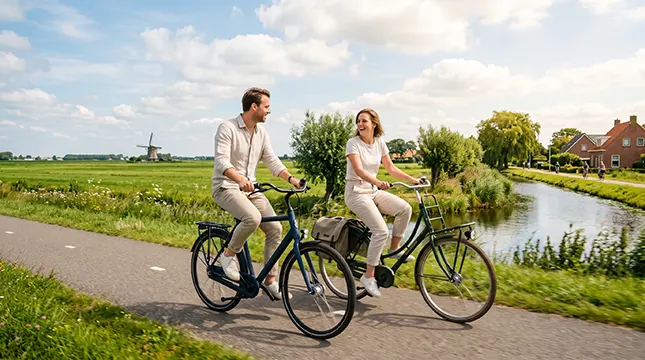
Prepare for famously direct communication, dedicated cycling infrastructure, and diaries booked weeks in advance.
Settling in is usually a fairly quick process for Brits, but a few things may take some getting used to.
Dutch communication is famously direct. If a colleague tells you your idea will not work, they are not being rude; theyare just being efficient, and most newcomers soon find it refreshing.
Bikes rule the road. Cycle lanes are everywhere, cyclists have priority in many situations, and you will quickly learn to look both ways before stepping out of a shop door. Buy a good lock, or better still, two.
Diaries matter too. Social plans, even dinner with friends, are often booked weeks ahead, and if you are invited to a birthday party, expect to congratulate not just the birthday person but their whole family as you work your way round the circle.
As for the weather, it will feel reassuringly familiar, grey, breezy, and changeable, so your UK raincoat will get plenty of use.
English will get you a long way, but learning some Dutch makes a real difference to everyday life and is usually required if you later apply for permanent residence or Dutch citizenship.
On that point, the Netherlands does not generally recognise dual citizenship with the UK, so read the IND guidance on dual nationality if becoming Dutch is a long-term goal.
Getting Your Belongings, Car, and Pets to the Netherlands

Managing European transit logistics. Let the experts handle Transfer of Residence customs relief, export-grade packing, and strict animal health certificates.
Because the Netherlands is just across the North Sea, most household moves travel by road, crossing by ferry or through the Channel Tunnel, with typical part load transit times of one to two weeks.
Since Brexit, you also need customs paperwork for your belongings, although personal belongings you have owned and used are usually eligible for relief from import duties when you move your main home.
Packing
Professional export packing protects everything from fine china to your home office kit, and our Packing for Export team uses materials designed for international journeys. For extra peace of mind, Marine MoveProtect gives you enhanced cover while your goods are in transit.
Your car
You can bring your UK car, but it will need to be registered in the Netherlands, and Dutch vehicle import tax, known as BPM, can be significant, although an exemption may apply if you have owned and used the car for at least six months before moving. The Dutch drive on the right, so a left-hand-drive car is far more practical day-to-day.
Our Vehicle Shipping team can help you decide whether bringing yours makes sense.
Pets
Dogs, cats, and ferrets need a microchip, a rabies vaccination given at least 21 days before travel, and an animal health certificate from your vet. The Dutch government’s guide to taking your pet to the Netherlands sets out the full requirements.
How White & Company Can Help You Move to the Netherlands
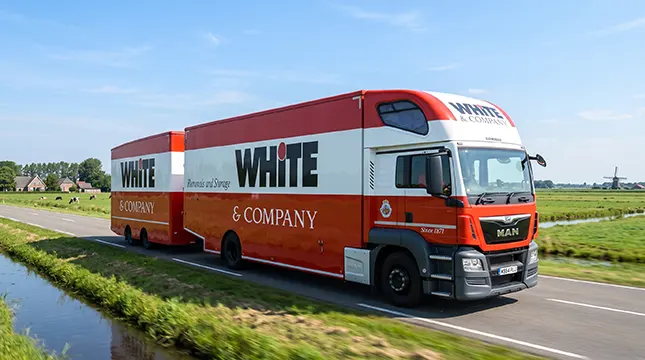
Trusted international removals since 1871. Partner with our fully accredited team for weekly European departures and secure containerised storage.
Once your permit is sorted and your new home is lined up, the final piece of the puzzle is getting your belongings to the Netherlands safely.
Our removals to the Netherlands service offers weekly departures, part-load and full-load options, and a trusted network of partners across the country, so your belongings are in experienced hands from your UK doorstep to your new Dutch front door.
If your dates do not quite line up, our Self Storage facilities give you a secure place to keep things until you are ready.
If you are an employer relocating staff, our Corporate Relocation team can coordinate everything from the survey to delivery, and if the Netherlands is just one stop on a wider journey, our European Removals service covers the whole continent.
With over 150 years of experience and founder membership in FIDI and OMNI, we understand the practical side of moving from UK homes to the Netherlands better than most. Get your free, no obligation quote today, or contact our team to talk through your plans.
Frequently Asked Questions About Moving to the Netherlands from the UK
These are some of the questions we hear most often from customers planning a move, whether it is across town or across the North Sea.
How can I get an accurate removals quote without a home visit?
A video survey lets a surveyor walk through your home with you over a video call, noting furniture and boxes room by room. It is quick, convenient, and just as accurate as an in-person visit for most moves.
When should I set up post redirection?
Ideally around three weeks before you move, as Royal Mail needs at least five working days to set it up. Royal Mail Redirection can forward letters to a new UK address or overseas, which is handy while you update your bank, pension, and other accounts.
What should I pack in a moving day essentials box?
Think about the first 24 hours in your new home. A kettle, mugs, tea and coffee, phone chargers, toilet roll, bedding, medication, basic tools, and any important documents are a good start, plus a favourite toy or two if you have children.
Is it cheaper to move house midweek?
Often, yes. Fridays and the last few days of the month are often the busiest times for removals, so moving midweek earlier in the month can mean better availability and sometimes a lower price.
How do I protect artwork, mirrors, and other fragile items?
Specialist wrapping and made-to-measure crates make a huge difference for valuable or delicate pieces. Our Packing Solutions service handles everything from glassware to large mirrors and framed art.
When should I tell my energy and broadband providers I am moving?
Give them around two weeks’ notice where you can and take dated photos of your meter readings on moving day. Broadband in particular can take a while to set up at a new address, so booking early avoids a frustrating few weeks offline.
What happens if my completion is delayed on moving day?
Delays do happen, so keep your removals company updated as soon as you hear anything. Most can hold your loaded belongings overnight or arrange short-term storage until the keys are released, and booking early, as explained in our guide on how far in advance to book a removals company, gives you more flexibility if dates change.
How long does a removal to the Netherlands from the UK take?
Direct road freight moves typically take between three and seven working days door-to-door. If you select a shared part-load service to reduce your overall moving costs, you should expect a slightly longer transit time of one to two weeks, depending on the specific delivery schedule and Dutch customs clearance times.
Do I pay import duty when moving my belongings to the Netherlands?
You can usually move your used household goods to the Netherlands completely tax-free under Transfer of Residence relief. You must prove you have owned and used the items for at least six months prior to your move. Furthermore, your professional removals team must submit a highly detailed packing inventory to Dutch customs on your behalf to secure this exemption.
Can I move to the Netherlands from the UK without a job offer?
Relocating without a secured job remains highly difficult for UK citizens post-Brexit. Unless you qualify for a specific family/partner visa, hold a secondary EU passport, or secure a specialist self-employed permit, you must secure a job with an IND-recognised Dutch sponsor to obtain your residence permit before you leave the UK.
How much does it cost to move to the Netherlands from the UK?
Your final European removal costs depend heavily on the total volume of your belongings, your exact Dutch destination, and your requested level of packing support. A dedicated vehicle for a full family home costs noticeably more than a shared part-load service for a one-bedroom apartment. We highly recommend booking a free video survey to secure an accurate, fixed quotation tailored exactly to your move.
What is the best way to move furniture to the Netherlands?
Professional overland road freight firmly remains the most secure, cost-effective method for shipping furniture across the North Sea. Partnering with a fully BAR-accredited European removals company ensures your valuable items receive specialist export-grade packing and comprehensive MoveProtect transit cover, preventing costly damage during the international journey.

Max is a seasoned writer and blogger in the real estate and home moving sectors, as well as a knowledgeable source of information for expatriates living and working abroad. His detailed insights have helped thousands of people move and live abroad with greater simplicity and ease.

Posted in: News
Leave a Comment (0) ↓