
Buying Property Abroad as a UK Citizen: What You Need to Know in 2026

Wondering whether life might be better lived overseas and considering buying property abroad?
Buying a home abroad as a UK citizen has never appealed to more people, and 2026 is shaping up to be another busy year for British buyers looking beyond these shores.
Whether the goal is a holiday retreat, a rental investment, or the first step towards a full relocation, purchasing overseas is a very different process to buying a home in the UK.
Legal systems change, the tax rules change, and even something as simple as visiting your own property is now governed by rules that did not exist before Brexit.
We have produced this article to help you navigate everything a UK citizen needs to think about before buying property abroad in 2026, from budgeting and mortgages through to visas, tax and the practicalities of actually getting there.
It is written for buyers at the very start of the journey, before a country has even been chosen, so treat it as a starting point rather than the final word.
At a Glance: A Short Overview of This Blog
This guide covers the essentials of buying property abroad as a UK citizen in 2026. Here is a quick summary of what is covered before we go into more detail.
- Why so many UK buyers are looking overseas in 2026, and what is driving the trend.
- Setting a realistic budget and understanding how currency movements affect your purchasing power.
- Financing your purchase, including why UK mortgages will not help and what the alternatives look like.
- Visas, residency and the 90-day rule, and what it means for how long you can actually use your property.
- Legal advice and ownership rules, since property law abroad rarely mirrors English or Scots law.
- The tax picture, covering both UK obligations and taxes in your chosen country.
- Popular destinations for UK buyers in 2026, from established favourites to newer options.
- Turning a purchase into a move, and how removals and storage fit in.
Buying overseas can be hugely rewarding, but it rewards careful planning far more than it rewards rushing in. Read on for the full picture.
Why So Many UK Buyers Are Looking Overseas in 2026

Chasing the digital nomad lifestyle. Learn why British buyers continue to invest heavily in European holiday homes and retirement retreats.
Interest in owning property abroad has held remarkably steady among UK buyers since Brexit, and if anything, it has grown, according to industry research that puts the number of British-owned overseas properties at somewhere around one and a half million.
The reasons vary enormously. Some buyers want a lock-up-and-leave holiday home somewhere reliably warm. Others are looking ahead to retirement and want to test out a location before committing fully.
However, a growing number are remote workers who realise their job no longer ties them to a particular postcode, or even a particular country, and are exploring the digital nomad visas now on offer in places such as Spain, Portugal and Greece.
Whatever the motivation, this is genuinely the first decision point in a much longer process, and it is worth treating it that way.
If a full relocation is on the cards further down the line, our European removals and international removals services are there when you are ready, but the property purchase itself always comes first.
Setting a Realistic Budget and Managing Currency Risk
A budget for buying abroad needs to stretch further than the purchase price alone.
Depending on the country, buyers should expect to add somewhere between 8 and 15 per cent on top for taxes, notary fees, agency commission and legal costs, and that is before furnishing the property or budgeting for ongoing costs such as local property tax, utilities and community charges.
Currency movements deserve just as much attention.
A purchase in euros or dollars can shift in cost by several thousand pounds between agreeing a price and completing, purely because of exchange rate fluctuations, so it is worth speaking to a currency specialist about fixing a rate in advance rather than leaving it to chance.
It is sensible to build in a contingency of at least 10 per cent above your total estimated budget.
Overseas purchases rarely run perfectly to plan, and having a buffer avoids awkward compromises later on.
Financing Your Purchase: Mortgages Abroad

Funding your dream home. Understand why UK mortgages do not apply overseas and how to successfully navigate local international lending requirements.
One of the most common misconceptions among first-time overseas buyers is that a UK mortgage can simply be extended to cover a property abroad. It cannot.
Financing an overseas purchase normally means either a local mortgage from a bank in the country you are buying in, a specialist international mortgage broker, or releasing equity from a UK property to fund a cash purchase abroad.
Local mortgages usually require much larger deposits from non-resident buyers, often between 20 and 40 per cent depending on the country, along with proof of income, existing debts and, in many cases, a local bank account.
Approval can take considerably longer than a UK application, so it pays to start the conversation early rather than assuming finance will simply fall into place once an offer has been accepted.
Visas, Residency and the 90 Day Rule
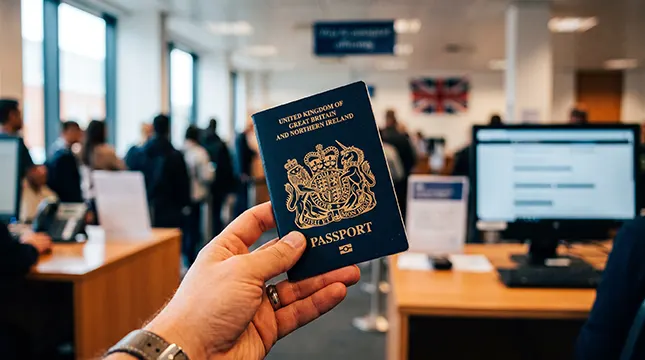
Navigating post-Brexit travel limits. Plan your long-term stay with specific residency routes like Portugal’s D7 visa or Spain’s non-lucrative visa.
Owning a property abroad does not, on its own, grant any right to live there. This catches out a surprising number of UK buyers, particularly those looking at Europe.
Since Brexit, UK passport holders can spend up to 90 days in any rolling 180-day period across the Schengen area without a visa, and this applies whether you own property there or not.
For most countries, if you want to spend longer stretches of time in your overseas home, you will usually need a long stay visa or a residency permit, such as Spain’s non-lucrative visa or Portugal’s D7 visa, both aimed at people with independent income who want to live in the country without taking local employment.
Popular non-Schengen destinations for UK buyers, including the USA, Australia and further afield, have their own separate visa systems, so you always need to check the rules on a country-by-country basis before you commit to a purchase.
Legal Advice and Local Ownership Rules
Property law abroad very rarely mirrors the English or Scottish system, and cutting corners here is where most overseas buying horror stories begin.
Official guidance from GOV.UK recommends appointing an independent, English-speaking lawyer who is licensed to practise in the country concerned, rather than relying solely on a lawyer recommended by the estate agent or developer.
It is also worth checking that the seller genuinely owns the title deeds and can legally transfer them, obtaining written confirmation of everything agreed during negotiations, and considering a local will to cover the property and any other assets you hold overseas.
Before travelling to view properties or sign anything, it is also worth checking the Foreign, Commonwealth and Development Office travel advice for your destination country, since this often includes practical notes on local property scams and legal pitfalls specific to that market.
Depending on your country of choice, research reputable lawyers and confirm they hold the certification required to advise UK expats. Check out online community platforms such as BritishExpat.com and expat.com.
Understanding the Tax Picture
Two tax systems come into play when a UK citizen buys property abroad: the one in the country of purchase and the one back home.
Locally, expect to pay a purchase tax or transfer tax, ongoing annual property tax, and potentially tax on any rental income if you let the property out.
In the UK, your position depends largely on your residence status. As a general rule, UK residents are taxed on their worldwide income and gains, which can include rental income from an overseas property and any profit made when you eventually sell it, while non-residents are usually only taxed on UK based income.
HMRC’s guidance on tax on foreign income sets out how this applies to your circumstances.
Because rules differ so much from country to country, and because the UK holds double taxation agreements with many popular destinations to prevent being taxed twice on the same income, this is one area where it is genuinely worth paying for independent tax advice before you buy, rather than after.
Popular Destinations for UK Buyers in 2026

Finding your perfect sunny retreat. Explore why Spain, France, and Portugal remain absolute favourites, alongside long-haul destinations like Australia.
Spain remains the perennial favourite for British buyers, with the Costa del Sol, Costa Blanca and the islands all continuing to attract strong demand, closely followed by France for its rural properties and city apartments alike.
Portugal continues to grow in popularity thanks to its digital nomad and D7 visa routes, while Italy remains a draw for buyers chasing renovation projects in the countryside.
Outside Europe, the USA and Australia remain popular for buyers with family ties or a longer-term relocation in mind, and Cyprus and Malta appeal to those who want an English-speaking environment with a Mediterranean lifestyle.
If a particular country is already on your radar, our destination guides for Spain, Portugal, Italy, the USA and Australia each cover the practical side of the move itself, from documentation through to shipping your belongings.
Turning a Purchase Into a Move

Buying is only ever the first half of the story. Once the paperwork is signed, the practical challenge of actually moving your life, or even just your furniture, to your new property begins.
Our planning your move guide and moving checklist are a good starting point once a purchase is further along, covering everything from timelines to paperwork.
If you’re considering shipping a vehicle alongside your household effects, our vehicle shipping service and Marine MoveProtect cover handle the logistics and insurance, while our packing for export service ensures everything is properly protected for the journey.
If you are not quite ready to move everything at once, our secure storage facilities across the UK are a practical way to bridge the gap while you settle into your new property, and if you are also selling a home in the UK as part of the process, our thinking about selling page covers that side of things too.
With over 150 years of experience moving people around the world, White & Company has helped thousands of UK citizens turn an overseas property purchase into a smooth, well-organised move. When you are ready to talk through the details, find your local branch or get a quote, and one of our team will be happy to help.
For your added peace of mind, White & Company are members of the British Association of Removers (BAR), which provides you with protection and an ombudsman should, in the unlikely event, something go wrong with your overseas move.
Get in touch today and discuss your requirements with one of our friendly team members. Our home surveys and quotations are free of charge and come with absolutely no obligation.
Frequently Asked Questions About Moving Abroad
How much does it typically cost to ship a full household abroad?
Costs vary widely depending on the volume of belongings, the distance involved, and whether you choose a shared or dedicated container, but a full household move overseas commonly runs from a few thousand pounds for a smaller shipment to significantly more for a large family home. A free home survey is the most reliable way to get an accurate figure.
Do I need to learn the local language before moving abroad?
It is not usually a legal requirement, though some visa routes do include a basic language test. Even a modest grasp of the local language makes daily life, dealing with officials and settling in socially considerably easier, so most seasoned expats recommend starting lessons well before the move itself.
What happens to my UK pension if I move abroad?
State pensions can generally still be paid abroad, though annual increases are not guaranteed in every country. Private and workplace pensions depend on the scheme rules, so check with your provider and, ideally, an independent financial adviser before finalising any moving plans.
Can I take my pet with me when I move abroad?
In most cases, yes, though requirements such as microchipping, vaccinations, blood tests and an animal health certificate apply, and the process can take several months depending on the destination country. Start pet paperwork as early as possible, since some countries have strict minimum waiting periods.
How far in advance should I book an international removals company?
Aim for at least six to eight weeks’ notice where possible, and longer during busy periods such as summer. International moves involve more documentation and shipping schedules than domestic moves, so booking early gives you more flexibility over dates and shipping routes.
Will my UK driving licence be valid in my new country?
This depends entirely on the destination. Some countries allow UK licences to be used or exchanged for a set period after arrival, while others require a fresh local test. Check the specific rules for your destination well ahead of time, since driving on an invalid licence can affect insurance.
What is the best time of year to move abroad?
Spring and autumn tend to be the most practical seasons, with milder weather and typically better availability from removal companies and shipping lines. Summer moves can suit families working around school terms, though they are also the busiest and most expensive time to book.

Max is a seasoned writer and blogger in the real estate and home moving sectors, as well as a knowledgeable source of information for expatriates living and working abroad. His detailed insights have helped thousands of people move and live abroad with greater simplicity and ease.

Posted in: News
Leave a Comment (0) ↓